Posted on

Young employees

In some areas, slightly different laws apply to employees under the age of 18 compared with adult employees. 

Employment agreements 

The same fair bargaining rules for employment agreements apply to both young people and adults. 

Young persons aged under 18 years can sign an employment agreement but it’s important that they receive help when agreeing to new terms and conditions. Potential employers must also provide a copy of the agreement to the intended employee, and give them the opportunity to take it away and get advice on the terms. 

All employees have the right to representation when dealing with their employer and they can choose anyone they want to represent them. Parents can be with their child when discussing employment matters with their employer. 

Record the employee’s age in wage and time records

As for all employees, an employer must keep accurate wage and time records for young employees. In addition, if the employee is under 20 years of age, the employer must also record the employee’s age in these records. 

Minimum wage 

There is no minimum wage for employees under the age of 16. 

Young employees aged 16 to 19 years can be paid a different minimum wage than adult workers, if the starting-out wage applies. 

The current minimum wage rates (before tax) are as at 1 April 2023. They apply to employees aged 16 years or over.

Type of minimum wage  Per hour  8 hour day  40 hour week 80 hour fortnight 
Adult $22.70    $181.60 $908  $1,816
Starting-out $18.16 $145.28 $726.40 $1,452.80
Training  $18.16 $145.28 $726.40 $1,452.80

Restrictions on hours worked 

If you employ any school-aged students (under the age of 16), their work hours must be outside of school hours only and in addition must not be between 10 pm and 6 am, including in times that interfere with the student doing school work. 

It is unlawful for businesses to employ school-aged students during school hours under the Education and Training Act 2020, unless they have a certificate of exemption. Failure to do so can lead to fines up to $1,000 for both the parents and the employers. 

Using tractors or other vehicles 

An employer, or someone hiring a contractor must make sure that any worker under 15 years does not: 

  • drive any tractor and any vehicle, other than a car, truck, motorcycle or machinery that weighs 700 kilograms or less
  • ride on any vehicle when it’s towing or is attached to anything
  • ride on anything towed by or attached to any vehicle.

An employee must have a current driver’s licence before driving any motor vehicle on a road. A road includes any car park, yard, or other part of a workplace which has public vehicle access. 

There is a special exception for the agricultural sector which allows young people doing contract work who are over the age of 12 years to use tractors for agricultural work provided they are fully trained or being trained, or they live on the property. 

Age restrictions on where a young person can work 

Employees under 14 

An under 14-year-old cannot work as a babysitter, au pair or nanny without adult supervision because it’s an offence to leave any child under 14 unsupervised. 

Employees under 15 years 

An employee or contractor who is under 15 years cannot work: 

  • on a logging site eg a forest where trees are being cut down or processed 
  • on a construction site
  • in any area where goods or hazardous substances are being manufactured
  • in any area where the work requires lifting heavy weight
  • in any area where the work being done is likely to harm the employee
  • with any machinery or assist work with any machinery.

These restrictions also apply to people under 15 years visiting the workplace. They don’t apply if the employee works at all times in an office in that area, or in any part of that area used only for selling goods or services. They don’t apply to visitors who are under direct adult supervision, on a guided tour or are in areas open to the public. 

Employees under 18 years 

An employer cannot employ anybody aged less than 18 years to work in: 

  • any restricted area of a licensed premises while that area is open for the sale of liquor, unless they are employed preparing or serving any meal, cleaning, repairing, maintaining, altering or restocking the area of any equipment, removing or replacing any equipment, stocktaking, or checking or removing cash
  • direct access to gaming machines in gaming venues such as bars, taverns and clubs where a gaming machine society has obtained a licence to operate gaming machines
  • sex work. 

Employees under 20 

Under 20-year-olds can’t work in parts of casinos where gambling takes place, or undertake any gambling-related duties. 

Settlement agreements 

People aged 16 or 17 years may sign settlement agreements to resolve a dispute with an employer. These agreements will still be final and binding. 

Checklist for employers 

Before your young employee starts 

  • Give them a start date and time.
  • Give them information they will need to know before starting.

When your young employee starts work

  • Give them a copy of their employment agreement.
  • Get their contact details and give them yours and/or their supervisor’s contact details.
  • Get their tax number and ask them to fill in tax forms.
  • Get their bank account number for payment.
  • Record their age in your wage and time records (this is a legal requirement if they are under 20 years).
  • Introduce them to their workmates and supervisors, and explain their roles.
  • Explain what is expected of them with regards to workplace behaviour.
  • Advise them of hazards in the workplace and how to avoid being injured.
  • Advise them what to do in case of an emergency and show them where safety equipment is located.
  • Provide them with personal protective equipment (PPE) (if applicable).
  • Provide them with a uniform (if applicable) and explain the company’s dress code.
  • Provide them with training on how to do the job, taking into account their lack of working experience.

Article reproduced from Employment New Zealand
www.employment.govt.nz 

Published in Business, Health & Safety, Environment in WIRED Issue 71 / December 2023 by Fencing Contractors NZ

Read WIRED online
Follow us on Facebook

© Fencing Contractors Association NZ (FCANZ)
Posted on

Nine warning signs in business you can’t afford to miss

There are always warning signs in business before trouble appears, but unless you are actively looking for them, they can take you by surprise. 

In military training, they teach you how to look for warning signs that could affect the mission. They call this situational awareness. Potential threats might include the enemy’s position, the current environment, the shape they are in mentally/physically or position if things went wrong and what the next move would be. 

It’s the same in the trades business – there are always warning signs when your business is headed for trouble. 

Having personally coached hundreds of trades businesses over the past twelve years, there are nine warning signs I look for. Deal with these early, and chances of success improve dramatically. Left too long, they can cause major problems at best and failure at worst. 

Early warning signs: 

These usually start small but will become bigger over time if not dealt with. So, tackle them early, and your business will stay out of trouble further down the line.

  1. Bank account is at low tide often
    This is the one that everyone pays attention to. If I have money in the bank then I must be ok, right?
    Not necessarily. If the bank account looks good, but you’ve just taken some large deposits on jobs, or there are suppliers’ bills that have not been paid for yet, then things will look better than they are. However, if the bank account always seems to be low and you are constantly scrambling for money then that is a bad sign.
  2. Owners not getting paid.
    Not being able to pay yourself a regular wage as the owner. Time spent in the business either on the tools or organising should be costed into jobs so the money is there. Too many trades business owners in early years are making less than if they were working for someone else. There should be enough for a wage and a healthy profit as well.
    Same applies to your partner when they are working in the business. If cashflow can’t support their wage, it’s a sign that you are just not making enough for a sustainable business.
  3. Confused by the numbers.
    It’s essential that the numbers you see are accurate and being checked at least monthly. It’s easy to fix one month but hard to fix twelve.
    I still see a lot of tradies’ financials that show incorrect margins because wages and other direct costs are coded as expenses rather than direct costs.
    If you are finding that your profit and loss shows large profits one month, then big losses the next, even though not much else has changed in the business, it’s likely you are not including “Work in Progress”, which takes into account deposits on jobs or costs incurred that can’t be billed yet.
    Not watching the numbers or inaccurate figures is like flying a Boeing 747 with no instruments, while your copilot is yelling instructions as they are looking out the window. Dangerous!
  4. Going in different directions
    When the owners or the team are pulling in different directions. This could be owners being out of alignment on the big issues or a clash between management and staff.
    I am not talking about the odd disagreement here when looking for the best solution to a problem. That’s healthy and challenges wrong assumptions. But when there are core issues that can’t be resolved, deep seated family disagreements or frustrated team members who are working against the company’s objectives – that will cause major problems.
  5. Discounting when things get quiet.
    If work is a little thin on the ground, it’s tempting to discount jobs to keep the team going. But how low is too low?
    A mistake I see a lot is discounting to get that big job and then later discovering they have spent the last six months breaking even or losing money on it.
    Big jobs usually have a few surprises, and it doesn’t take long for extra hours to add up. A builder client I worked with told me at our first session he had completed a $800,000 job and made nothing out of it. That doesn’t happen to him anymore.
    Discounting margins to get the work, combined with growth, is a slippery slope. You won’t really know how profitable the job was until the end, so a buffer is essential. Larger companies can lose a lot of money here and may not realise until it’s too late.
  6. Collecting too many barnacles
    If jobs are consistently taking longer than they should, this will be eating away at your margins. Or you have too many clients who keep complaining about the price, trying to get something extra for nothing.
    Like barnacles on the bottom of a boat, left long enough they accumulate, slowing momentum; over years they will also strip away the paint and water will erode the metal. Too many barnacles will do this to your business too.

Late warning signs 

These are much harder to fix. At this point, the business is in intensive care and requires immediate intervention to survive.
Cashflow will be bad, and it’s likely losses have been accumulating for years; at this stage, time is running out. 

  1. Constantly being chased by suppliers.
    Suppliers are chasing for money that is significantly overdue and some have put the business on stop credit. Your front desk is hesitant to answer the phone in case it’s another creditor asking for money they haven’t got. Payment arrangements get made and then broken, losing further credibility.
    Paying for old jobs with new money from current jobs. Robbing Peter to pay Paul, whoever is yelling the loudest might get something. Jobs are constantly delayed as materials aren’t available to finish the work.
  2. Employees not getting paid on time.
    Not enough money for wages some weeks, pay runs are being delayed. Lots of mistakes and callbacks on jobs as employees are no longer invested.
    At this point, the team has lost confidence in the business and is likely to be applying for more secure jobs. Some have already left and there is a lot of talk around town that the business is in trouble.
  3. Legal
    Owing a lot of overdue money to suppliers and the IRD. One or more creditors have lost patience and have taken legal action against the company to get paid. Costs are accumulating and lawyers are heavily involved, adding even more expense.
    The reality is that at some stage every trade business will experience some of the early warning signs in their business. This could be working through a small cashflow issue with a supplier extending payment terms or making an arrangement with the IRD to pay the GST this month.
    But if there is a cluster of these signs or they are happening often, then act early as they are much easier to fix now than later.
    Even at these late stages, the business can sometimes be turned around, depending on how big the deficit is and if there is enough profitable work to trade out of it.
    However, this often involves convincing lawyers, creditors, staff and the IRD to back your plan which can be a tough sell. I have coached companies who have traded out of these final stages, but sometimes it’s just too late, the hole is too big. Better to deal with the warning signs early, way less stressful and much better odds of success.

If you recognise these warning signs in your business and want to get ahead of them? 

Then book a free business checkup and let’s look at the numbers together. 

Article supplied by Daniel Fitzpatrick
www.nextleveltradie.co.nz
Published in Business, Health & Safety, Environment in WIRED Issue 71 / December 2023 by Fencing Contractors NZ

Read WIRED online
Follow us on Facebook

© Fencing Contractors Association NZ (FCANZ)

Posted on

Why train staff?

Many businesses wonder why they should train staff. Common reasons we hear for not training staff in the use of plant and equipment, or how to stay safe whilst working for the company include:

‘As soon as they know enough, they’ll be off, contracting on their own, after all my effort.’

‘Nah, it costs too much, they’ll figure it out.’

‘They told me they could do it.’

‘My staff aren’t worth it’.

‘It’s common sense!’

‘A bit of pain will teach them, right?’

Many workplace accidents are happening as workers don’t wish to say, ‘I’m not sure I can do that task’, or they don’t want to let you down, so will give it a go – sometimes with serious outcome.

Powerful Benefits of Employee Training & Development

Trained staff can do a job well and safely, and have pride in the job they do.
Training also:

  • Increases employee performance
  • Creates a stronger workforce
  •  Boosts motivation and engagement
  • Expands knowledge sharing
  • Fosters innovation in the workplace
  • Improves company processes
  • Creates a stronger business brand to clients
  • Aligns with organisational goals

So, who is legally responsible for ensuring you have the correct training and supervision for your task on site?

Under the Health and Safety at Work (General Risk and Workplace Management) Regulations 2016 (the GRWM Regulations), a person conducting a business or undertaking (PCBU) must ensure, so far as is reasonably practicable, the information, training, instruction, and supervision provided to workers is suitable and adequate.

EXAMPLE FROM THE COURTS
WorkSafe v Progressive Meats Ltd [2022]
A 17-year-old worker operating a brisket cutter suffered partial amputation of his thumb, index finger, middle finger, and ring finger on his right hand. The injured worker was trained to use the machine by a co-worker who started on the same day as him. The co-worker demonstrated how to use the machine with one hand. The Judge convicted Progressive Meats on the grounds that, while the company had comprehensive safety and training systems in place, and was driven by the need to maintain safe procedures in all areas, it had not ensured adequate instruction, monitoring and supervision of workers. Progressive Meats was ordered to pay a fine of $280,000 and reparations of $48,000 to the injured worker.
OFFENCE INDIVIDUAL WHO IS NOT A PCBU OR OFFICER (EG A WORKER OR OTHER PERSON AT A WORKPLACE) OFFICER OF A PCBU OR AN INDIVIDUAL WHO IS A PCBU (EG SELF-EMPLOYED) ANYONE ELSE (EG AN ORGANISATION THAT IS A PCBU)
Section 47
(reckless conduct in respect of duty that exposes any individual to whom that duty is owed to a risk of death or serious injury or serious illness)
5 years in prison or a $300,000 fine, or both 5 years in prison or a $600,000 fine, or both $3,000,000 fine
Section 48
(failure to comply with a duty that exposes an individual to a risk of serious injury, serious illness or death)
$150,000 fine $300,000 fine $1,500,000 fine
Section 49
(failure to comply with a duty)
$50,000 fine $100,000 fine $500,000 fine

Failure in this duty could be costly if serious harm were to occur – not just to you but also to the worker and family of the worker harmed.

What Information, Training, Instruction and/or Supervision should you cover?

Different work activities can require different levels of information, training, instruction, or supervision. Certain work activities require higher levels of training or supervision for workers and others in the workplace to remain healthy and safe. This includes remote or isolated work – i.e. your typical rural fencing job. You must engage with workers when making decisions about procedures for providing information and training to workers.
You must ensure, so far as is reasonably practicable, those who carry out work of any kind, use plant of any kind, or deal with a substance of any kind that is capable of causing a risk in a workplace:

  • either have adequate knowledge or experience of similar work so they are not likely to cause harm to themselves or other people, or are supervised by someone who has the relevant knowledge and experience, and
  • are adequately trained in the safe use of all plant, objects, substances, or equipment the workers are, or may be required, to handle, as well as all personal protective equipment (PPE) that the workers are, or may be required, to wear or use.

To work out what training (which includes the provision of information or instruction) or supervision you should cover, think about:

  • The nature of the work carried out by the worker – e.g., what is the worker  being asked to do? What is your workplace like in general?
  • The nature of the risk associated with the work at the time the supervision or training is provided – e.g., what kind of risks are there?
  • The control measures implemented in relation to the work being undertaken – e.g., what control measures are there already?

Consider:

  • What your workplace is physically like – is it a quiet office, a busy workshop, a construction site, an outdoor environment, areas with lots of workers and members of the public nearby?
  • What does your work involve – what machinery, equipment, PPE, and substances are used? What are the control measures in place?
  • Your workers – e.g., what is their skill level and depth of experience regarding the known work risks?

Using this information, work out what skills, knowledge and experience your workers will need to work safely. This includes what information and training is required for dealing with emergencies.
Now work out what training, instruction, information, or supervision will be needed for workers to gain the skills, knowledge, or experience to work safely.

When the Training, Instruction or Supervision should occur

Work out when training/supervision will be required and how you will set aside enough time for this to occur (given the nature and risks involved in the work).
For example:

  • Will new inexperienced workers be intensively supervised until they are shown to be competent to carry out the tasks unsupervised?
  • Will new inexperienced workers be comprehensively trained for all tasks they may need to carry out in one go, or will they be trained/supervised on a task-by-task basis as needed?
  • Will experienced workers only be supervised for new tasks for the first time? Think about how you will alert supervisors/trainers/workers when specific training/supervision is required before starting certain tasks. Think about how you can alert workers when certain tasks require training/ supervision – e.g., will you have warning signs on machinery or at workstations?

You must ensure, so far as is reasonably practicable, that the training and  information provided is readily understandable by any person it is provided to. Trainers and supervisors of workers should be competent. They can be in-house or from external organisations.

Think about the best method of delivering training, instruction, or supervision. Consider your workers’ age and experience, their first language, any cultural differences, and the potential level of understanding of the workers.

For example, if some of your workers find it difficult to read, information or training may need to be provided orally, or through pictures or demonstrations. They may also need to be supported by a buddy or
supervisor.

Key considerations:

  • What level of experience / competence your trainers or supervisors need to have.
  • If your workers have previous experience with the work.
  • If your workers have poor literacy or English as a second language.
  • If your workers learn better one-to-one or in a group.
  • If the training/instruction should be paper, audio-visual, or computerbased (including using tablets or smartphones).
  • If there are relevant formal qualifications your workers could obtain (e.g., unit standards from NZQA).
  • How you will get your workers to show they understand.
  • How you could provide daily reminders of safe work practices (e.g., SOPs, posters or flashcards summarising the key points kept at workstations, and toolbox meetings) once the formal training is completed.
  • If your workers can follow plant and machinery manuals.
  • Workplace Approved Code of Practice (ACOPs) for tasks – have these available and read them.

How to tell the providers of the Training/Instruction/Supervision what must be covered

Think about how to tell supervisors/trainers/workers what the training should always cover, or how supervision needs to be carried out.

Think about how you can tell:

  • Supervisors: what they need to do (e.g., will you have documented procedures?)
  • Trainers: what training is required during new worker inductions and for certain tasks (e.g., will you have documented training procedures or checklists of points to be covered during training?).

FINALLY, you must ensure that your workers have signed:

  • Relevant Safe Operational Procedures
  • Read through the Workplace Risk Register
  • Completed Competency Checklists

Training is valuable – teams grow and learn together. Make training part of your business and stay safe out there. Ask your advisor for help accessing resources, or connecting with trainers.

Luck runs out but safety is good for life.

Take care out there team.

Article written by Debbie
www.ruralsafe.co.nz

Published in Business, Health & Safety, Environment in WIRED Issue 71 / December 2023 by Fencing Contractors NZ

Read WIRED online
Follow us on Facebook

© Fencing Contractors Association NZ (FCANZ)
Posted on

When is enough, enough?

How do you handle that difficult team member who isn’t performing? At what point do you say enough is enough? 

The employee who gives pushback every time you correct them, the complaints about that person not pulling their weight, mistakes combined with that “I don’t really care” attitude. It can feel like you’re banging your head against a brick wall. 

They take a lot of time and energy to manage. When their name is mentioned, it triggers you into reaction mode, bracing for the next problem that could be coming your way.

If you’ve been in business for a while, you’ll likely have had someone like this at some point. Pareto’s Law would say that if you had 10 employees, there is at least one who is exceptional and one that is difficult to manage. I’ve seen this many times with the thousands of business owners I’ve coached.

Some of the strategies that have worked best with my clients that could also work for you. But keep in mind I am coming from a business coach perspective. So make sure that you check with your HR specialist about the legal aspects which aren’t covered here.

The Litmus test

Remember in science class, you learned how to use litmus paper to tell if a liquid is acid, neutral or alkaline? When litmus paper is dipped into the liquid it changes colour, then you check the colour against the chart to determine if its acid, neutral or alkaline. Red is acidic, green is neutral and purple is alkaline.

Let’s apply the litmus test to your team member to see what effect they’re having.

  1. The Team

How is the behaviour of this person affecting the rest of the team? Is the team getting frustrated and discouraged, are they feeling demotivated, or is there any bullying involved? Is the overall performance of the team being affected? 

  1. The Business

Is this person’s performance affecting how long jobs are taking, or causing too many mistakes at extra cost? Is their behaviour spilling over and affecting your clients or your professionalism as a business? 

  1. You

Are you constantly putting out fires caused by this team member, or every time you hear their name it triggers you into anxiety around what could go wrong next?

I worked with a husband/wife couple in an engineering business with a team of around ten, who had an employee who was their most knowledgeable team member. But his attitude was terrible, it was so bad that the wife admitted to me one day that she didn’t even like going into the office in case she might see him. 

But they both felt powerless, worried about losing him with all the work they had on, and they didn’t think they could replace him at that higher skill level. This guy knew it which made things even worse.

After a few weeks of us working together I encouraged them to take control back. So they started calling the shots again. He was given the opportunity to change his attitude or move on. He decided to move on.

It only took a couple of months to find a good replacement, while the rest of the team stepped up to another gear. They had their business back and enjoyed coming to work again, also the rest of the team was much happier.

Mirror, mirror, on the wall

If you have a problem team member it’s important to take a look in the mirror. Good coaches know that the business is a reflection of the business owner. Your strengths, weaknesses, success and mistakes reflect in your business. The more you work on yourself, the better your business will perform.

  1. Did things go wrong at the hiring stage or has this developed over time?

Only by looking back can we see what really happened. It’s important to learn from any mistakes you might have made so you don’t have to repeat them.

  1. Do you have a good hiring process in place that takes into account attitude not just skills? 

Have you set the right structure in place including written checklists, best practices and training so your team members have the opportunity to succeed? Notice I said opportunity – they still have to do their part.

  1. Are you giving each team member regular feedback, do they know if they are winning or losing?

When we help clients put these systems in place the culture improves and the team takes on more responsibility as the standards are much clearer.

  1. Do you know everyone on your team well, like the names of their partner/children and what’s most important to them outside work?

Business owners and managers who show their team that they really care, have better team culture with employees who are more likely to step up when needed. Also, their best employees usually stay longer. 

What’s changed?

When you first employed that team member there must have been some traits and skills you liked. If they were a good performer initially then what changed? Did you recognise the early red flags? 

Maybe something major is happening at home, their marriage might be in trouble, or a family member is dealing with a health crisis. They could be clashing with another team member or if could simply be the wrong job for them.

It’s important to find out early what your team members can and can’t do. Don’t assume, especially in the 90-day trial period. 

My drainage client recently discovered some large mistakes on jobs from his foreman that cost tens of thousands of dollars to fix. When questioning him and his team this confirmed suspicions that he was not leading the team well and they were getting increasingly frustrated with the lack of direction. After some further training it became clear that this guy was not foreman material, he was in the wrong role. They are now looking at other options for him. If this was done earlier it would have saved a lot of frustration, time and money.

I know I need to do something, but where to start?

One tool we use with clients that works well is our review process. It’s a great way to talk about the elephant in the room without the awkwardness.

By the end of this process it’s really clear to both of you if they are meeting the standard and a track of what to do next. 

My building client had a foreman who wasn’t leading the team well and pushing back at any constructive feedback. My client didn’t like confrontation so he let these things slide a bit too long. 

Once we implemented the review process, the line was very clear on what was not acceptable anymore. The foreman stayed for a short couple of months then left. They discovered some significant mistakes which cost them a few weeks to fix, but at least they could get back on track. 

It’s your move

If you have a difficult team member, they will be costing you a lot more than their salary.  Moving forward there are basically two choices, carry on as you are and hope things get better (which is unlikely), or you can start being proactive and dealing with the issues.

If you challenge them now, they have a chance to become better. Alternatively, if they are in the wrong place, you are not doing them or you any favours by leaving them there. 

Whatever happens next is up to you but being proactive always gives you better options. 

Article supplied by Daniel Fitzpatrick
www.nextleveltradie.co.nz

Published in the Business, Health & Safety and Environment Section in WIRED Issue 70 / September 2023 by Fencing Contractors NZ

Read WIRED online
Follow us on Facebook

© Fencing Contractors Association NZ (FCANZ)

Posted on

Incident and injury reporting and investigation

How prepared are you for a serious harm notification?  Let’s talk about incident and injury reporting, and investigation.

On the safety front, Rural Safe have had a few months of investigations into serious harm injuries that have taken time and a toll on the business entities involved. 

We have been successful in supporting the injured employees of several very serious incidents, and the business owners in the WorkSafe investigations that have followed.  

The responsibility the business owners have shown through active health and safety recording, training, and assurance in the care of their people has been of great assistance in the process. It doesn’t lessen the impact of the life-changing injury for the employee, but the investigation to ensure that the business had done what was reasonably practicable to ensure safety within the business is important in this type of situation.

The incidents have highlighted a need for people to understand what injuries need notification and how business owners would manage the following investigation that occurs.

Not only does a serious incident or accident in your business change how you look at the business operation, it should also make you question how you would evidence to the regulator that you have the best health and safety management in place. 

Looking at your process for investigation is the first plan. Ensuring you follow a process makes sure that you and your team can be assured of gathering the information required.

What guidelines do you follow? 

Guidelines for reporting and notification of events, injury, illness, incidents and follow-up investigations: 

  • All injuries, incidents, and near misses will be notified to the manager or supervisor as soon as possible.
  • All injuries/incidents are to be recorded in the Injury/Incident Register
  • All near misses must be reported. These near-miss reports will help to identify any trends that may be developing. If needed, new procedures can be developed to avoid reoccurrence.
  • All serious accidents that result in death, injury, illness or serious incident to any person working on our property will be reported directly to WorkSafe NZ as soon as possible. Ensure the scene of the accident is not disturbed unless to save persons from further harm. The scene will remain frozen until all clear is given by WorkSafe NZ.
  • A “Notice or Record of Injury/Serious Harm” form is to be forwarded to the nearest WorkSafe NZ office within 48 hours, if requested by them. A complete investigation will be also required to be undertaken to find the underlying causes of the accident.
  • Inform all employees/contractors of the outcomes of the injury/incident investigation i.e., new hazards and their controls.
  • All contractors working within the business will report all injuries/incidents to management as soon as possible so we can ensure further harm is avoided.

An accident: an event that causes any person to be harmed or might have caused a person to be harmed.

Harm: means illness, injury, or both; and includes physical or mental harm caused by work-related stress.

Hazard/Risk: means an activity, arrangement, circumstance, event, occurrence, phenomenon, process, situation, or substance (whether arising or caused within or outside a place of work) that is an actual or potential cause or source of harm and includes:

  • A situation where a person’s behaviour may be the actual or potential cause or source of harm to the person or another person; and
  • Without limitation, a situation described in sub-paragraph (1) resulting from physical or mental fatigue, drugs, alcohol, traumatic shock, or another temporary condition that affects a person’s behaviour.

If it has the potential to cause harm to someone then it is a hazard/risk.

Near Hit / Near Miss:  referred to as an Incident under the HSWA 2015.  Any event that is close enough to give you a scare and could have caused serious injury if circumstances had been slightly different.

Notifiable events: where a person has received a serious harm / notifiable event injury, or a serious incident has occurred where there is a high potential to have caused serious harm / notifiable event. Notifiable events are categorized as Injuries, Illness and Incidents (serious near misses). These events are listed below:

Notifiable injury or illness

Means

a) Any injury requires the person to have immediate treatment.

–   As an inpatient; or 

–   For any of the following reasons:

  • Any amputation of any part of the body, or
  • A serious head injury, or
  • A serious eye injury, or
  • A serious burn, or
  • The separation of the skin from an underlying tissue (such as degloving or scalping), or 
  • Spinal injury, or 
  • The loss of a bodily function, or serious laceration,

b) An injury or illness that requires the person to be admitted to hospital for immediate treatment.

c) An injury or illness requiring the person to have medical treatment within 48 hours of the exposure to a substance. 

d) Any infection to which the carrying out of work is a significant factor, including any infection that is attributable to carrying out work:

  • With micro-organisms, or
  • Involves providing treatment or care to a person, or 
  • Involves contact with human blood or bodily substances, or
  • Involves handling or contact with animals, animal hides, skins, wool or hair carcasses or animal waste products, or
  • Involves the handling or contact with fish or marine mammals.

e) The following zoonosis conditions involved with contact or handling of animal’s hides, skins, wool or hair, carcasses, or animal waste:

  • Leptospirosis
  • Anthrax
  • Brucellosis
  • Psittacosis (from parrots)
  • Seasonal Influenza of animal or avian flu

f) Or any other injury or illness as prescribed by regulations.

Notifiable incident

Means an incident in relation to a workplace that exposes the worker or any other person to a serious risk to that person’s health or safety arising from immediate or imminent exposure to:

  • An uncontrolled escape, spillage, or leakage of a substance,
  • An uncontrolled escape of gas or steam,
  • An uncontrolled escape of pressurised substance, 
  • An uncontrolled implosion, explosion, or fire,
  • An electric shock, 
  • A fall or release from height of any plant, substance, or thing,
  • The collapse, overturn, failure, or malfunction of, or damage to and plant that is required to be authorised by regulations,
  • The collapse or failure of an excavation or any support shoring of an excavation,
  • The collapse or partial collapse of a structure,
  • The interruption of the main system of ventilation in an underground excavation or tunnel,
  • The inrush of water, mud, or gas, in workings in an underground excavation or tunnel,
  • A collision between two vessels, a vessel capsizes, or an inrush of water into a vessel.

Includes any other incident declared by regulations to be a notifiable incident for the purposes of this section; but does not include an incident declared by regulations not to be an incident, or not to be notifiable.

Documentation you will need to supply to the regulator

Key to any investigation is the documentation that supports you have undertaken steps to ensure a healthy and safe business to operate in.

  • A commitment from the business owner to Health and Safety in the workplace 
  • Evidence to show engagement, duty of care and due diligence in the business for health, safety and wellbeing.
  • Training in the operation and equipment that will be used for the job. Ongoing competency to operate.
  • Management of the known risks and hazard identification with good controls in place reviewed regularly.
  • Prestart and toolbox discussions about what’s happening today, how we can be safe.
  • Management of hazardous substances and how to use these safely.
  • Emergency planning – how do we get help, where are we, first aid, fire be prepared who is the first aider?
  • Accident and incident management and reporting of the event, review of the process and what can change to make it safer.
  • Plant and machinery maintenance register
  • Management of visitors, contractors, to your worksite 
  • Reviews of the operation and changes made if required.

Ensuring you have support along the way is valuable and as a team, you need to talk and listen to what each person in your business has to say about safety. 

A STOP. THINK. DO. MOMENT is all it takes to change the outcome of a life in some situations. Speaking up about unsafe actions or situations should be welcomed and working together is the best solution to change the safety culture of your business. The conversation with a family who has lost or had an injured loved one from an incident at your workplace is not a place you want to be.

Check into WorkSafe for guidelines or call your consultant for information to help you understand your responsibilities as a business in every changing Health and Safety world.

She’ll be right is not always right. 

Take care out there team.   

Article supplied by RuralSafe
www.ruralsafe.co.nz

Published in the Business, Health & Safety, Environment Section in WIRED Issue 70 / September 2023 by Fencing Contractors NZ

Read WIRED online
Follow us on Facebook

© Fencing Contractors Association NZ (FCANZ)
Posted on

How to: Gravity Retaining Walls

In our sixth instalment of our retaining walls feature, Nick Liefting continues to take us through the complexities of Gravity Walls.

Gabion Wall

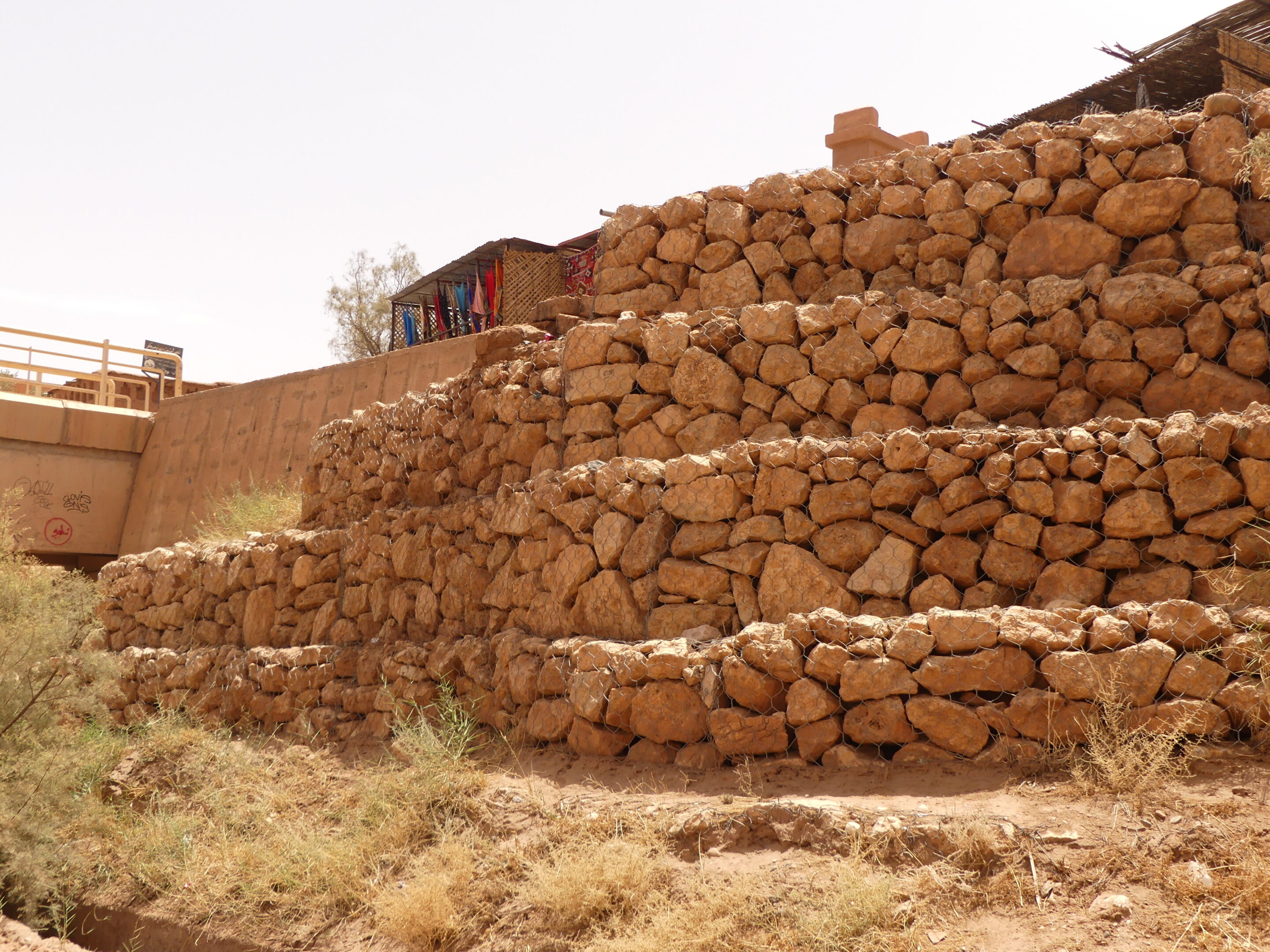
The word Gabion, is derived from the Italian word gabbione, meaning big cage, also Italian gabbia and Latin cavea, meaning cage.  It is precisely that, a basket or container filled with earth, stones, or other material and used for the purpose of holding back earth of different levels.

The Gabion wall is the oldest retaining system known to man, as they were used to protect the banks of the Nile River in ancient Egypt over 7000 years ago, and they’re still used today by Civil Engineers all around the world as an incredibly effective and efficient retaining wall.  In the Middle Ages, gabions were used as military forts.  In earlier history, Civil Engineers have extensively used gabions for stabilisation of banks, coasts, highways and erosion control of slopes.

Early gabions were round cages with open tops and bottoms, made from wickerwork and filled with earth.  Obviously, gabion walls were a popular form of construction prior to the advent of the machinery we have today.  i.e., excavators, drilling and piling rigs.  The only resource available then, was manpower.

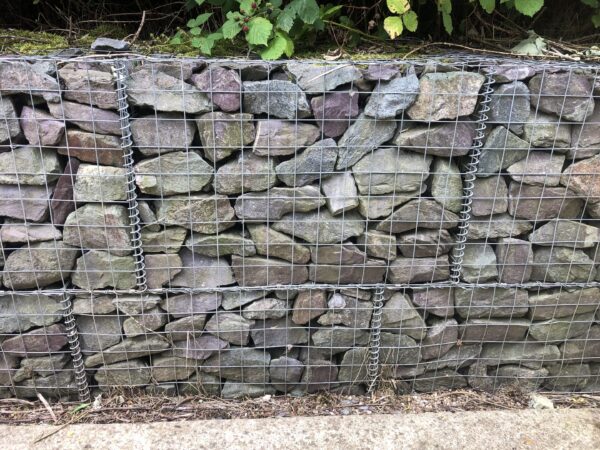
Today gabions are constructed using either woven wire or welded mesh baskets.

Application

Gabions are generally used:

  • Where there is difficulty drilling or driving piles
  • For coastal protection
  • Where height is required, i.e. beyond what a cantilever wall can do

Types of baskets

Welded Gabion Basket

There are two main types of baskets:  

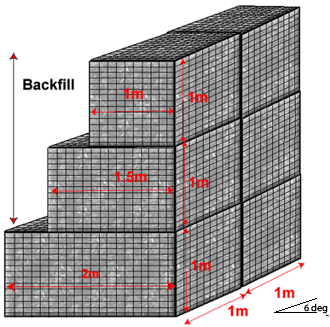
  1. The first is a hexagonal woven mesh which comes either galvanised or galmac, which is galvanised and PVC coated.  They come in sizes; 2.0 x 1.0 x 1.0 and 1.0 x 1.0 x 1.0.  
  2. The other is a galvanised welded mesh with a 75mm aperture

Foundation

Because there is a high loading on the ground, particularly when the wall is increased in height, a secure foundation must be installed.  

The two types are:

  1. 150mm thick compacted hard-fill or
  2. 150mm thick concrete with two layers of reinforcing mesh

A 1.0m high wall exerts 1.60 Tonne per square metre onto the foundation.

The foundation is excavated to a depth so that the base of the basket will be approximately 100mm below finished ground level.

The width of the foundation is two-thirds of the wall height, e.g. if the wall is 3.0m high, the base basket is 2.0m wide; 6.0m high, 4.0m wide.  Also, allow 200mm at the front and back of the basket – this helps when aligning the baskets and provides a place for the drain-coil to sit.

Gabion walls can and are often used where the ground conditions are soft, where drilled holes either collapse or fill up with water, and with driven poles the ground is not strong enough to cater for the horizontal forces applied.  To give the gabion foundation extra founding strength, piles can be driven and the concrete foundation constructed on top.  It is advisable to have this designed by an Engineer.

Wall construction

The baskets come as a ‘flat pack’ and need to be opened up and corners tied together.  Gabion tie wire is supplied, however, when doing large amounts, the supplier can hire to you a pneumatic clipping gun which applies a 40mm type ‘hog ring’, and it is certainly a lot faster.  The welded mesh baskets come with a wire spiral, which are turned onto each corner, a simple and effective system.

When placing the baskets on the foundation, and the height is also obviously predetermined, therefore the base basket width is known.  

If wider than 1.0m, place the base baskets crossways, which is necessary for the integral construction strength.  Also, when baskets are placed, apply ties to tie them together.

Rocks

The infill rocks are classed at quarries as gabion rock, which are generally 100mm to 150mm, and most quarries stock this product.  It is important not to have too many small rocks among the product.

The baskets each have 1.0m x 1.0m cells and prior to rocks being loaded in each cell, cross wires are attached with four in each cell, two at a third of the way up and two at two thirds up.  These are to stop the baskets from bulging.

When the rock is loaded into the baskets, care must be taken not to drop from too high, and must only be trickled in a bit at a time.  Once a small amount is in the basket, it is all then hand placed with larger rocks to the face and smaller rocks filling cavities.  Too many people think you just fill the basket up using an excavator.  It is a very mundane and labour-intensive job.

Once the basket is full, the lid is tied on and the top of the baskets tied together, with the next layer of baskets tied on and the process repeated again.

It is important to keep the baskets face as square and flat as possible, even though it is a basket full of rocks and it will never be an oil painting; we need to make it presentable.  There have been other ways of giving a better presentation, by using smooth river stones, or behind the front mesh of the basket, placing paving slabs.

With back filling, drainage metal is very seldom used as the baskets themselves are free draining, however, it is common to place filter cloth behind to stop silt infiltration into and through the baskets.

Segmental Wall

Keystone wall

Segmental retaining walls are modular block retaining walls used for vertical change applications.  

The two most common products used for this type of wall are:

  1. Keystone Block
  2. Allan Block

The only major difference between these two blocks is their individual locking system.

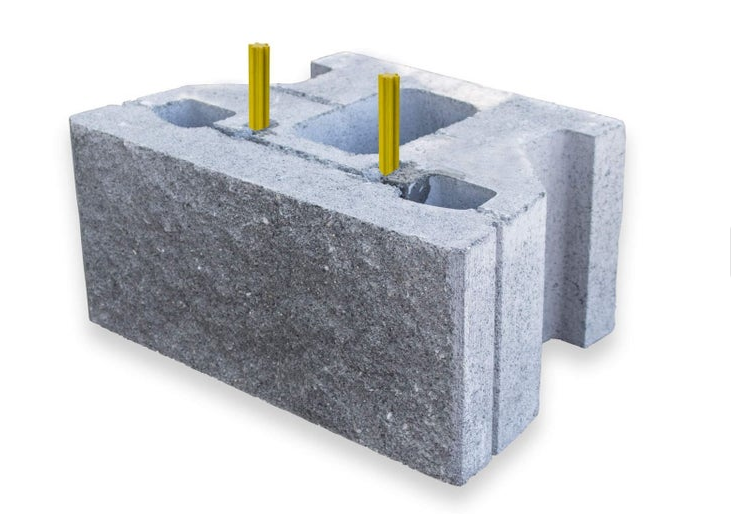
The keystone block connects with two fibreglass pins in each block, whereas, the Allan block is placed up against a vertical lip on the front of the lower block.  Both blocks have a slightly different face width.  Allan block at 435mm and Keystone at 455mm, and have a similar height of 200mm.  They also both have corner blocks and capping blocks with the latter being 100mm high plus a huge range of face textures and colours.

Construction

Footings are an integral and very important aspect of the construction of a segmental wall.  I say this because:

  • Footings need to be exact in level and to have a smooth surface without any undulations.
  • Steps to be exact to 200mm.
  • Any unevenness will be evident in each course of blocks laid, therefore, the time spent on the footing finish is paramount.
  • Believe you me, the extra time spent on this certainly speeds up the placing of blocks

The depth of the top of the footing needs to be approximately 100mm below finished ground level at the front of the wall at the lowest point.

There are two main types of footing:

  1. Compacted hard fill
  2. Concrete

I prefer the latter.  Footing depth is 150mm with compacted Gap 40 or Gap 20 and finishing off with a Gap 7 levelling course.  The width is generally 600mm.  It is best to use boxing on each side of the footing and lasering it to the exact level using plenty of pegs.  If there is any soft or unsuitable areas, these must be removed and filled with well compacted hardfill.  Being a mass gravity wall, there is in excess of 400kg per lineal metre of wall for every 1.0m in height.  I prefer a concrete footing and this is achieved by 100mm compacted hard fill with a 50mm layer of concrete on top.

Keystone Block

Placing blocks

The principles for laying both types of blocks are much the same, be it quite a physical and you could call it, ‘back breaking’ work with blocks weighing around 34kg each and it doesn’t really work with two people lifting a block. 

With the bottom course, it needs to be positioned so that it is where it should be in relation to boundary pegs, etc.  There is room for movement with a 600mm wide footing.  The best place for a string line is across the back of the blocks, as the face is often textured and not straight.

Once each course is placed, the voids need to be filled with a drainage aggregate.  If up against an excavated face, drain-coil is placed at the base of the wall and drainage aggregate brought up behind the blocks as the wall increases in height.  At the top, a capping block is glued down, but for the glue to work, the blocks must be dry.

With curves, which do look very appealing, blocks need to be carefully cut with a diamond blade saw to create smooth joins.

Tie backs

Segmental walls can only be constructed to a height of 900mm standing on their own.  Beyond that height, a tie-back system is required, by means of Tensar Geogrid placed between the blocks running horizontally behind the wall.  Depending on wall height, these can be placed on every second course and increased in spacing further up the wall, and can be up to 10m behind the wall.  The benefit with a segmental wall, you could say the ‘sky is the limit’.  We have done one at 10.0m high.

The backfill material is either compacted clay, or what is more popular, is hard fill.

In the case with geogrids, a vertical drainage blanket is placed behind the grids with the base drain-coil having connecting lines to the base drain-coil directly behind the wall.

Walls of this complexity are always best to be designed by an Engineer, as they also require building consent.

I will say here, you can never over drainage a retaining wall!  The cost is a very small percentage of the total wall cost. 

Article provided by Nick Liefting
Nick Liefting Contractors Ltd
nlcontractors.co.nz
NL Contractors Logo

Published in the Training & Events Section in WIRED Issue 70 / September 2023 by Fencing Contractors NZ

Read WIRED online
Follow us on Facebook

© Fencing Contractors Association NZ (FCANZ)
Read the other articles here:

Posted on

How to: Sliding Gates

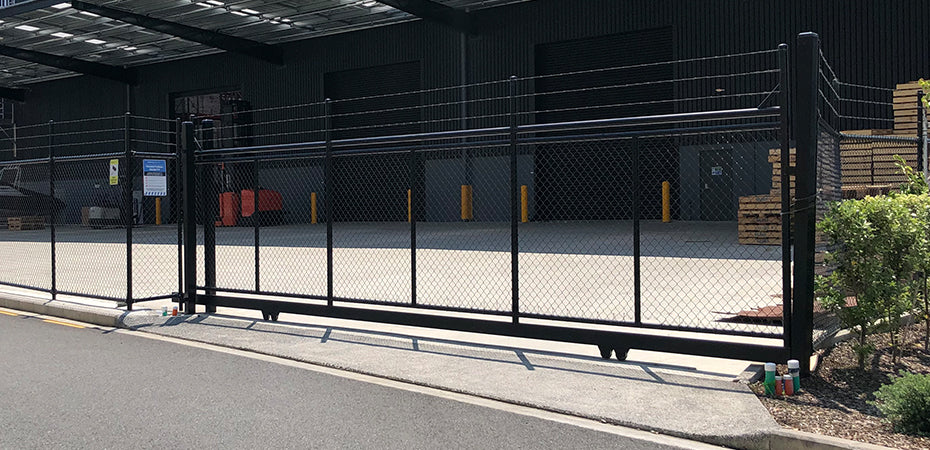
Advice from Edgesmith on what wheels and guidance system to use for your sliding gate setup.

What type of wheels should I use?

The two main considerations when choosing a gate wheel are clearance and capacity. Larger diameter wheels roll better across a bumpy track and double bearings give them a higher load capacity.

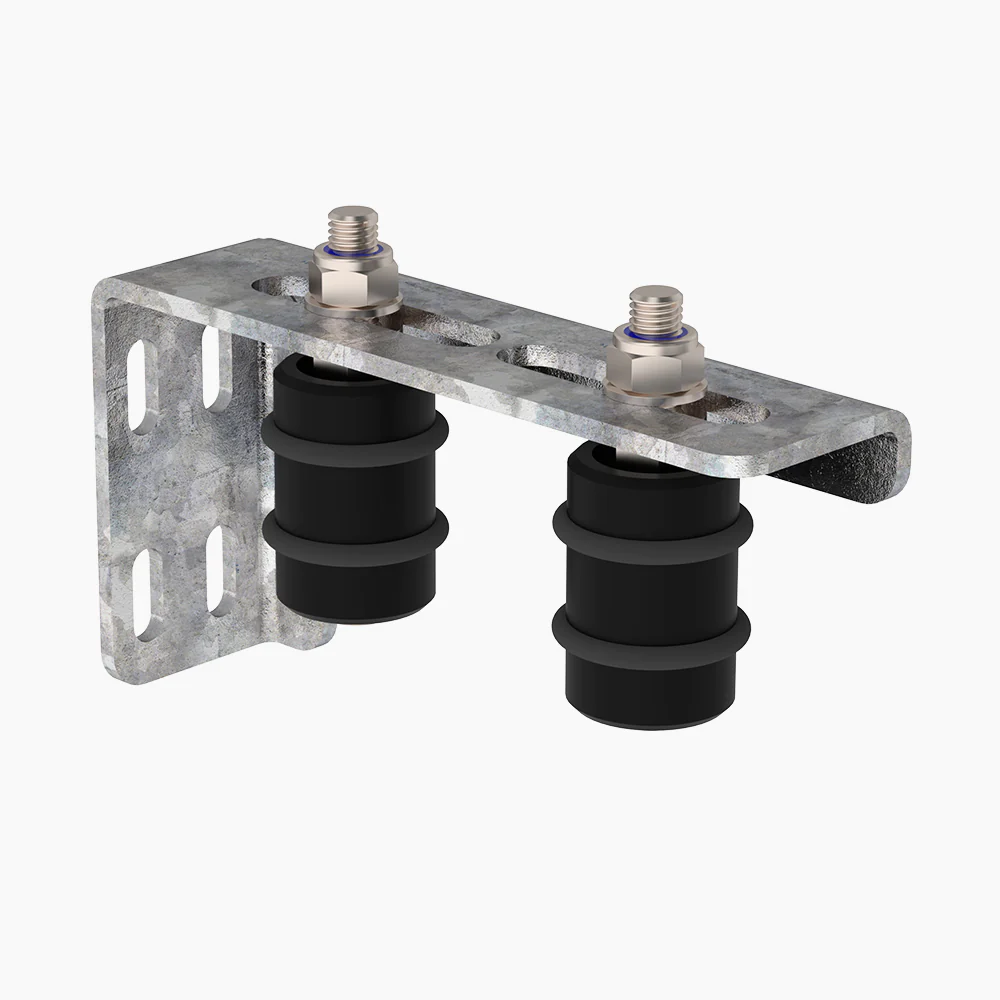
  • Undergate Wheels are easy to fit but often have too much clearance. And if the bolts fall out the wheels will fall off. ALWAYS use loctite on the bolts.
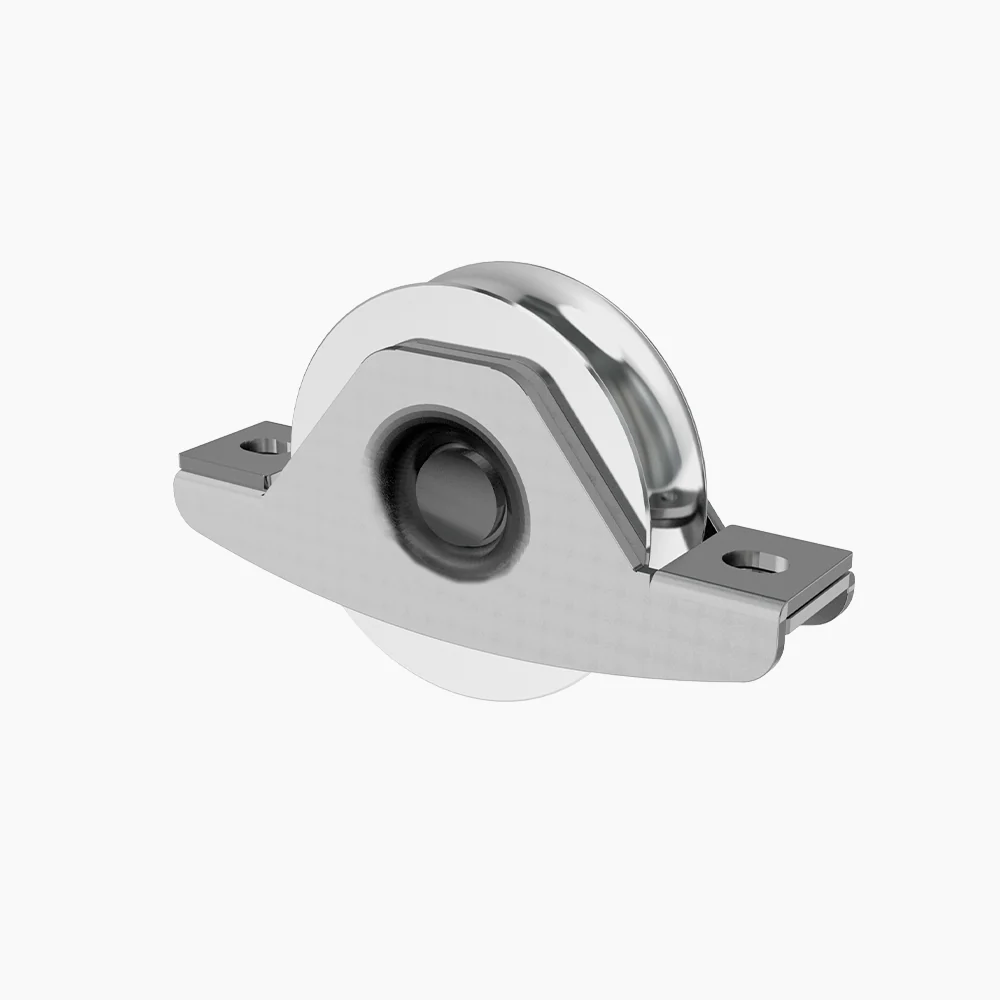
  • Rebate wheels are far more secure as they sit inside the gate frame and the weight of the gate keeps them in place.   
  • Low Profile Rebate Wheels look great on an architecturally styled residential gate. But more than 20mm of camber in the driveway will leave your gate scraping on the ground.
  • High Clearance Rebate Wheels allow for up to 50mm of driveway camber and are an excellent option for commercial or residential gates being more secure than undergate wheels while still having plenty of clearance.
  • Four wheels on a gate doesn’t double their capacity. Unless the driveway is dead level then only two wheels will be carrying the load while the other two are slightly off the ground at all times.
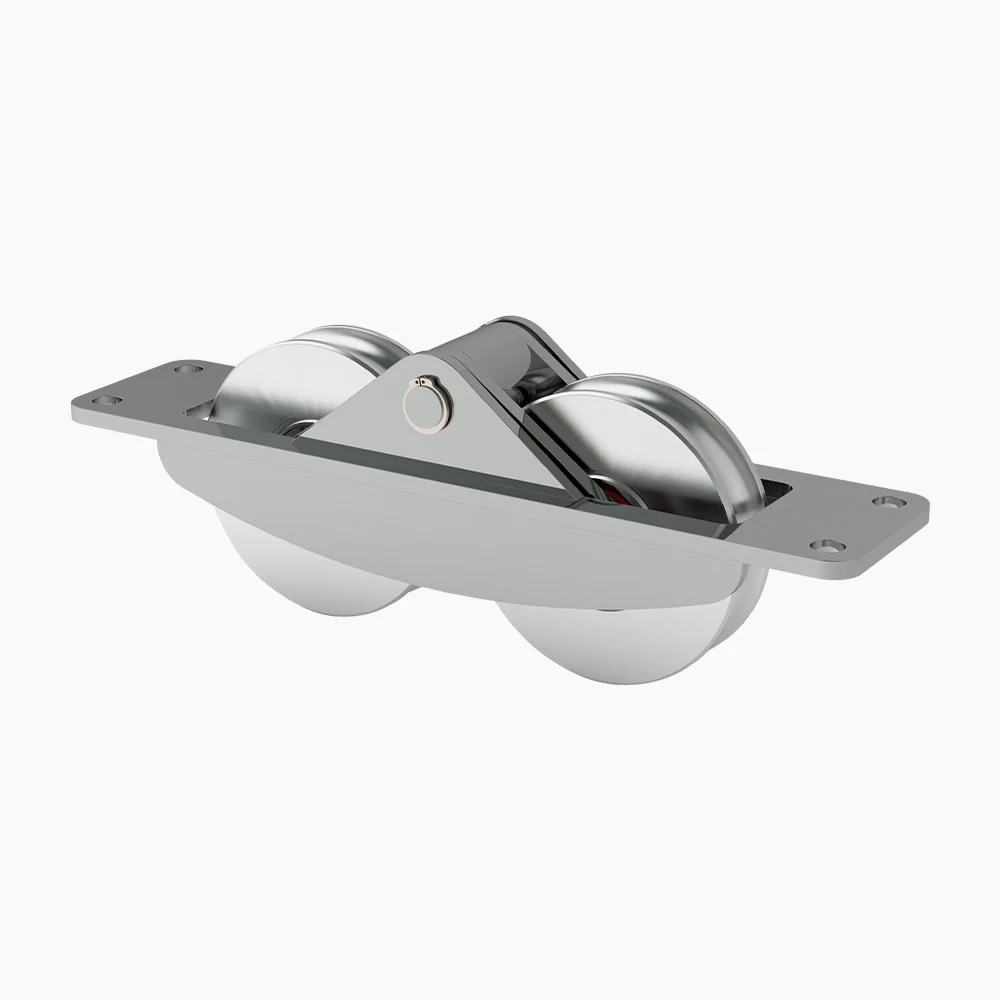
  • High Clearance Double Rebate Wheels feature a pivoting rocker plate that distributes the load evenly across both wheels. They have high capacity, are very secure and have good clearance. We recommend them for all long industrial gates.

Guide Systems

Choice of sliding gate guide system depends on whether the gate has a flat top, if it is raked, the speed of the automation and whether the pickets protrude from the front of the frame. All guide systems should be designed so that the gate can never fall over – even if the rollers come loose.

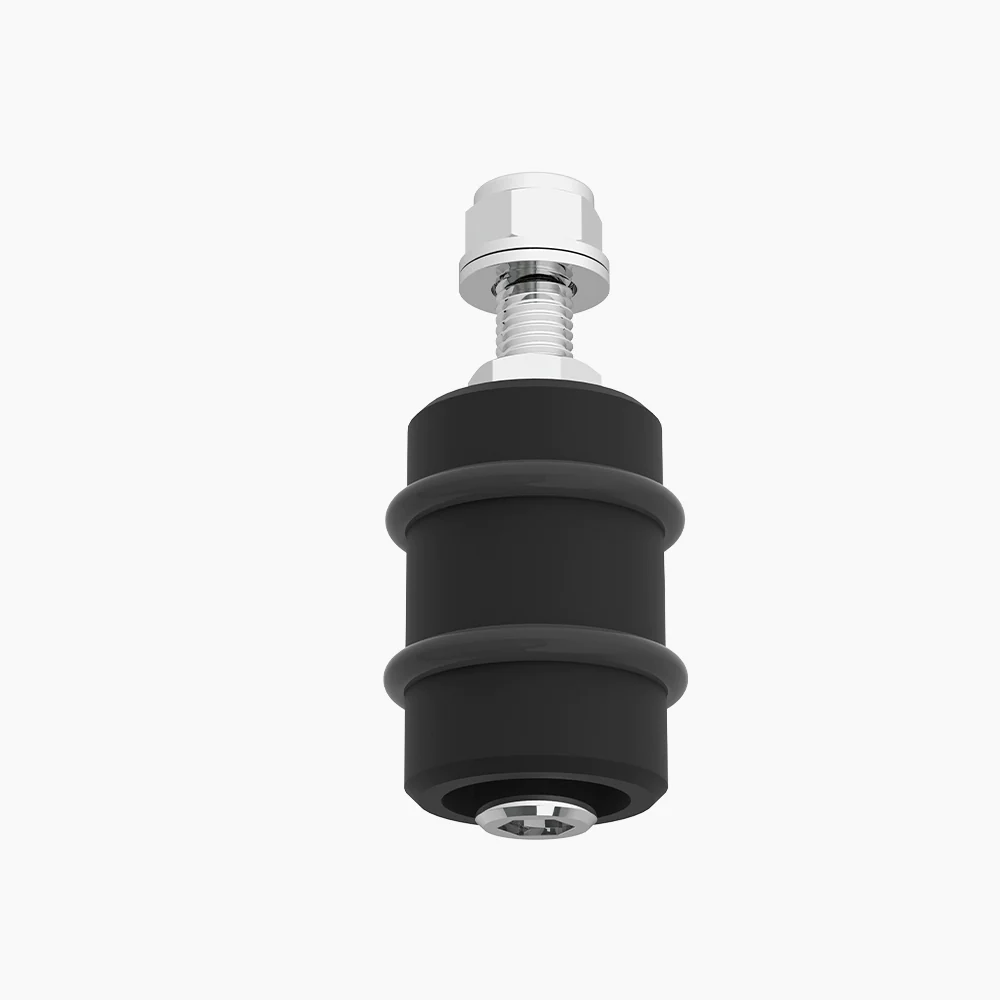
  • Bearing Rollers should be used for high-speed automated gates. Standard rollers tend to have too much friction and end up dragging and marking the gate. O-Ring Rollers grip the gate and reduce rub marks. A must have if you are concerned with the paint job!
  • Angle Guides welded to the back of the gate allow it to be guided from one side. It the gate has a curved top or pickets that protrude from the front then an angle guide will be needed.
  • Truglide Blocks are a very tidy way to guide a residential aluminium gate – especially on sloping ground. They need an angle guide on the back of the gate and move up and down a channel guide. Do not use them with galvanised gates – they will be torn up very quickly.
  • Rub Strips are a super simple way to guide a small residential gate.

Safety

The safety aspect of gate installs is crucial when it comes to installing gate wheels and gate rollers correctly, maintaining gate stability, smooth operation, and enhanced user safety. Choosing the correct gate wheels and rollers that match the gate’s weight and dimensions is crucial to ensure optimal performance and prevention of accidents. Incorrect installation or using the wrong products can compromise gate functionality, leading to potential hazards or even serious injuries. By prioritising proper installation and utilising appropriate gate wheels and rollers, you can significantly enhance gate safety and enjoy long-lasting, trouble-free operation. 

If you need more advice on what wheels and guide system to use for your sliding gate setup then give Edgesmith a call.

Article supplied by Edgesmith
www.edgesmith.co.nz

Published in the Training & Events Section in WIRED Issue 70 / September 2023 by Fencing Contractors NZ

Read WIRED online

Follow us on Facebook

© Fencing Contractors Association NZ (FCANZ)
Posted on

5 cashflow strategies you need to know

If you have a team of one or thousands, cash flow is an essential key to having a successful business. It’s also an area a lot of tradies struggle with. 

Studies from ANZ Bank showed that 82 percent of SMEs fail due to cashflow issues, 69 percent of these businesses were profitable. 

In other words, 69 percent of those businesses failed not because they were making losses but because they ran out of money to pay suppliers, wages, and other expenses to keep going. With better cash flow many of those businesses likely would have survived. 

Doctors know that without oxygen, water, and food you cannot survive. Without oxygen, you will last around 3 minutes, without water for 3 days, and without food for 3 weeks. It doesn’t matter how fit or healthy you are now, without these 3 essentials you will not survive.

Cash is the oxygen that keeps your business going. Not convinced? How many days will your business last without cash in the bank?

Here are 5 proven cashflow strategies all tradies need to keep your bank account full and stress levels low

1 – Watch the canary in your coal mine

Coal mine workers would always take a canary in a cage into the mine to see if it was safe. This was their early warning sign, if there was a lack of oxygen and or dangerous gases, the canary was the first one to be affected. If the canary died or looked unwell, they would drop tools and act immediately while there was still time.

With cash flow in your business, there are also early warning signs. The canary for you might be that you seem to be always behind with bills every single week, too many overdue accounts, or that warning letter from the IRD. 

These are all signs that need immediate attention. It might be making an arrangement with the IRD, chasing overdue invoices, or getting more work. But don’t leave it, act now before cash flow gets out of control.

Look for the warning signs early. With our clients, we always equip them with our tradie dashboard, which gives a snapshot of each important part of the business and identifies the early warning signs where cash flow will be affected and needs attention.

2 – Ensure your rhythm supports your cash flow

In music, the rhythm is defined as “the underlying structure that all the other elements of music are held together by”. In your business, you also have a rhythm for cash flow. But is it one that supports or hinders your business?

Are you always scrambling to pay wages every month, chasing the next dollar to stay ahead for another month? Waking up at 3 am realising that you forgot that the GST is due tomorrow? 

Or is it a symphony where your business is predictable, with a steady flow of cash to pay all the bills and then some? Where large jobs have payment terms structured with cash flow in mind, invoices are always sent out on time, a team member regularly follows up payments, and there is a healthy cash buffer in both your cheque and tax accounts.

With the right systems in place, key team members taking responsibility, and regular check-in points, you can have a predictable rhythm with much less stress and a healthy cash buffer.

3 – The numbers are your guide

The numbers will show you how much cash you have available and what is required in the future. 

You should be watching your cash position (if you collect all the money owed and paid everyone, what’s left), cashflow forecast (tells you what your bank account is going to look like over the next few weeks/months), overdues, Profit and Loss (are you making money or digging a hole). 

Be careful to make sure your numbers are accurate. I often see a lot of builders who have profit figures that look great one month and then terrible the next. This can be a timing issue when deposits are taken or invoicing stages on larger projects. Which can really skew your figures big time. We usually have a work-in-progress calculation added to the profit and loss to allow for this.

One of the first things I always do when working with clients is check if their numbers are correct and show them which ones are most important. Over 50% of the time their numbers are wrong.

Wrong information leads to bad decisions. You don’t want to be buying that new ute with cash and then discovering there is not enough to pay the taxes due next month.

4 – Make sure you have the right map

Now that you have the numbers, identify your location and where you want to go. A map will show the way. 

If you are traveling from Auckland to Dunedin by car, and you only have a map of Canada that’s not going to help. Many tradies are using the wrong map or no map at all for their cash flow.

One of my clients had plenty of work on but was worried about increasing the team even though the work was profitable. The problem is they were using the old map from last time, which was ‘grab anyone you have available and hope it works out’. It didn’t. 

This time it’s different. They have the right map now, a system for attracting and identifying the right team members, a cashflow forecast (so there are no surprises when payroll comes around), have identified the best and most profitable jobs, and are building a cash buffer for the first few weeks while the new team members get up to speed. All are geared to optimising cash flow.

The right map will guide you on the direct path, without all the wrong detours in between.

5 – Don’t let your emotions tank your bank account

Do you go into a tailspin every morning when you check the bank account and get crazy frustrated at having to follow up with the late payers yet again? That voice in your head starts playing again. It’s just not fair…we work so hard… why us…

Or maybe you know you need to get into the office and do that invoicing you have been putting off all month, but decide to stay on the tools this afternoon instead. Get home and argue with your partner (who pays the bills) about why there is no money in the account, and then feel guilty for the rest of the night that you still haven’t done the invoicing.

Procrastination kills momentum, splits your focus, and creates emotional thinking rather than being strategic.

The bank account doesn’t care how you feel or how hard you work, ultimately it’s just a reflection of the choices (good and bad) you have made in the past, the systems you have put in place for collection, the clients you decided to work with, the overdraft facility you arranged or the types of jobs you took on. 

When you replace emotion with strategy, cash flow gets much simpler and less stressful. You make time in your week for the important things like invoicing, following up on overdues, getting your team in sync, and cash flow forecasting. Now you have laser focus on what needs to be done and when and who is responsible for completion.

Master this game and your business and bank account will improve significantly.

These strategies work best when you use them consistently and are even more important as you grow your business. But also be aware that as your business and the economy changes you will need to keep adjusting. Many things can disrupt short-term cash flow, as the last couple of years have proven with shifting schedules, material shortages, losing or adding key team members, holidays, lockdowns, sick leave, or maybe you are in a growth phase. These all affect cash flow.

With the current uncertain environment, it’s essential to have plans in place to handle the cash flow.

One of my largest clients is very profitable and has grown significantly over the past few years, at times they still struggle with cash flow. But because these principles and systems we have put in place they have been much better equipped to handle the surprises that have come their way.

Cashflow is the oxygen of your business, make sure you get it right and your business will thrive.  

Daniel Fitzpatrick
www.nextleveltradie.co.nz

Published in the Business, Health & Safety, Environment Feature in WIRED Issue 69 / June 2023 by Fencing Contractors NZ

Read WIRED online

Follow us on Facebook

© Fencing Contractors Association NZ (FCANZ)
Posted on

It won’t happen to me

First frost of the year has arrived, the leaves are changing quickly as we prepare for the winter change. The ground has become a place of concern, with tracks becoming slippery and water levels increasing in some places. WorkSafe is urging farmers and contractors to lose the “it won’t happen to me” mentality, following a spate of machinery-related fatalities this year.


It is great to hear of the support our fencing and other agricultural contracting colleagues have been providing the East Coast and Hawke’s Bay in a time of need as I travel up that way currently. There is a lot of hard work ahead of these guys, and our thoughts are with the farmers that have lost much from the cyclone. Reach out and talk to your friends over there; they would appreciate a friendly ear, I’m sure.

On the safety front 

We have had several serious harm incidents that are of concern when using tools, vehicles, and machinery.


According to figures supplied by WorkSafe NZ, five people died in farm accidents in the first ten weeks of 2023. In that period, there were also 30 notifiable injuries. This year’s deaths are predominately the result of tractor and quad bike rollovers.

WorkSafe is conscious of the “unprecedented stress” some farmers are under, particularly those affected by the recent cyclones. When under stress, it is even more important that farmers and contractors take time to plan for how to deal with the aftermath.

The simple grease gun is not so simple anymore

One such event, involving a Grease Gun for an excavator contractor, has had a terrible outcome for the user. A quick check-over, fuel up, and grease to the machine, like any normal day. The day was a bit wet and slippery, and the contractor was running behind, with plenty of work building up. He slipped while trying to get the jump on the day’s work – pushing in tracks with his excavator. The tracks were slippery and he fell while trying to insert grease into the required location. With no gloves on, the grease fired into his hand. The pain was almost immediate but hard to see.

The day turned into a helicopter rescue and a hospital stay, with extreme pain. An injection of the grease into the hand has caused life-changing effects and amputation of the finger that received the injury. The grease had made a pinhole entry into the hand, penetrated the bone and traveled swiftly up the arm cavity. Initially in the finger, but the damage was severe.

Proper tool use and care

Whether you are using a manual, battery-operated, air-powered or AC electric grease gun, the high pressure developed by the tool should be considered. High pressure can develop in different ways.

High-pressure injection injuries may be caused by accidental injection of grease through the skin and into the underlying tissue. Generally, fingers or hands experience this type of injury, which is most likely to occur when a hose ruptures. Also, some lubrication applications require needle-type accessories that can lead to an injury if used improperly.

An injection injury may be very small and essentially painless, and the injured person may be tempted to continue working. However, if you receive any type of injection injury, you should seek medical attention immediately.

The lubricant will need to be removed and treatment initiated to prevent infection. If possible, provide the medical technician with the brand of grease or oil involved so that the manufacturer can be contacted regarding the possible toxicity of the lubricant.

Keep grease guns clean and working correctly. All repairs should be performed by a competent person. When lubrication tasks are performed, grease often gets on your hands, so be sure to wash them to remove any chemical residue.

Ensure the use of PPE at all times – good gloves are essential, and eye protection. Use hearing protection if using a battery, or compressor type of grease gun.

Personal safety

Stay alert while using a grease gun. You should never operate any tool if you are tired or impaired by a substance, as a moment of inattention may result in serious personal injury.

Although the use of grease guns is widespread, these tools deserve respect and should be used in accordance with the manufacturer’s safety guidelines to avoid injury. They are not to be used in jest: be careful where you point them and how they are used.

How to operate a grease gun safely 

There are four main types of grease guns: manual, battery-operated, air-powered and AC electric.

Each type has its own specific set of guidelines, but many general rules are applicable to all, such as training, proper tool use and care, work area safety and personal safety. 

Manual grease guns include lever-action and pistol-grip models. These popular tools are widely used and are the most economical type of grease gun. Manual grease guns can achieve pressures up to 10,000 pounds per square inch (psi), while plug-valve sealant guns can reach 15,000 psi.

Battery-operated grease guns are ideal for speeding up routine lubrication tasks. Using this type of grease gun can also help to minimise operator fatigue. These grease guns are rated anywhere from 6,000 to 10,000 psi, depending on the model.

Air-powered or pneumatic grease guns use compressed air to apply pressure to an air piston, which drives the grease piston and forces lubricant out of the coupler into a grease fitting. By depressing the gun’s trigger, a steady flow of lubricant is dispensed. Typically, pneumatic grease guns are rated up to 6,000 psi.

AC electric or corded grease guns provide a consistent flow of grease and are often used as an alternative to air-powered tools. AC electric grease guns generally are rated up to 7,000 psi.

Training

Effective lubrication requires specific training, ranging from the actual physical activity of applying the lubricant to the effects of misapplication, including spills and damage to machinery. The operator should be trained on each piece of equipment to be lubricated, as well as each grease gun that will be used to accomplish the task.

Some general rules of lubrication also should be considered.

  1. DO NOT apply lubricants to a machine in operation unless the fittings are located in a safe place.
  2. Never reach over, under, through, or past moving parts of the equipment to complete your task. You should maintain proper footing and balance at all times to facilitate better control of the tool in unexpected situations.

Work Area Safety

Regardless of the type of grease gun, it is important to keep your work area clean and well-lit. 

Wipe up lubricant spills immediately, or use absorbent drying pads or granules. Sources of lubricant leaks should be repaired to maintain a safe environment.

If you are using a power tool, make sure that the area is free of flammable liquids, gases, or dust, which may be ignited if the tool creates a spark.

In addition, power tools should not be exposed to rain or wet conditions, and care should be taken to prevent cord damage, as this can increase the risk of electric shock.

Minimise distractions, such as bystanders, while operating your grease gun, as they may divert your attention from the task at hand. NEVER PLAY AROUND WITH OR USE A GREASE GUN FOR PRACTICAL JOKES.

Safety features are available, and precautions can be taken to minimise the risk involved in using high-pressure grease guns. 

The key is to use the right tool for the job. 

DO NOT improvise or change the grease gun configuration for any purpose other than that which was intended.

It is critical that all of the components utilised are rated for the amount of pressure being applied, so you should use only hoses specified by the grease gun manufacturer. For example, if your grease gun is rated at 10,000 psi and your hose is only rated at 1,500 psi, the situation can become hazardous very quickly.

Inspect the hose between the grease gun and the coupler before each use, if there are any signs of wear or damage on the hose, do not use it. When a grease cartridge is loaded into the grease gun, the follower rod should be securely latched to the end cap, so it doesn’t spring back unexpectedly.

Use care when removing the pull-tab on the cartridge to prevent getting cut by the tab’s sharp edges. In addition, always aim the grease coupler away from your body when loading and priming the grease gun. You don’t want to take any chances that grease may get into your eyes. Grease guns are equipped with safety devices, but their effectiveness may be limited by the positioning of grease nipples on certain cars and trucks. Grease guns with needles should have a protective shroud or cover that prevents this type of accidental injury.

Battery-operated grease guns have a few safety guidelines of their own. 

  • The power switch should be in the off position before inserting the battery pack.
  • The battery pack should always be disconnected from the grease gun before changing accessories or unscrewing the grease cylinder from the gun. Never attempt to open the battery pack or expose it to water.
  • When not in use, keep the battery pack away from metal objects such as paper clips, coins, keys, nails, screws, or other small items that can make a connection from one terminal to another.
  • When using a battery charger, use only the charger specified by the manufacturer. Ensure that the cord is situated so it will not be stepped on, tripped over or otherwise subjected to stress.
  • DO NOT operate the charger with a damaged cord or plug, or if it has received a sharp blow or been dropped. You should also refrain from charging batteries or using any electrical (corded) grease gun in damp areas.
  • Always read and follow the manufacturer’s instructions before using your grease gun. Avoid kinking hoses, as this can weaken them and make them more susceptible to ruptures.

Battery-operated, air-powered, and AC electric grease guns can build extreme pressures, which may not be evident to the user. Therefore, extra caution should be taken with these tools. Never exceed the maximum input air pressure on pneumatic tools.

Most of these grease guns run at a 40-to-1 grease pressure-to-air ratio, so substantial pressure is created with a relatively low input air pressure.

Read your manual and have emergency items to get help: Personal Locator Beacons, and first aid items. 

Whatever your tool, ensure the safety and training to use is front of mind – always. One slip is all it takes to change the day. 

‘The standard you walk past in safety, is the standard you set.’

Take care out there team.   

Article supplied by Ruralsafe
www.ruralsafe.co.nz


Published in the Business, Health & Safety, Environment Feature in WIRED Issue 69 / June 2023 by Fencing Contractors NZ

Read WIRED online
Follow us on Facebook

© Fencing Contractors Association NZ (FCANZ)
Posted on

How to: Gravity Retaining Walls

In our fifth installment of our retaining walls feature, Nick Liefting takes us through the complexities of Gravity Retaining Walls.

In the article, I would like to explain the types of Gravity Wall, also known as Mass Walls, and their respective applications.

Different Types:

  1. Masonry Block Wall
  2. Mass Block Wall
  3. Gabion Wall
  4. Segmental Wall
  5. Crib Wall
  6. Mechanically Stabilised Earth Wall (MSE)
  7. Cast-in-situ Concrete Wall

Applications:

  • Where drilling holes is not easily achievable, e.g., rock
  • Where ground conditions are showing high KPA (ground strength) readings
  • Aesthetic reasons
  • Able to achieve heights higher than cantilever walls

1 – Masonry Block Wall

This wall construction is based on your standard hollow core masonry concrete blocks, which come in 100, 150, 200, and 250 series, which applies to the thickness. The length is always 400mm, as is the height, 200mm. Retaining walls are mostly constructed using series 200 and/or 250, which is the thickness in mm.

Masonry Block retaining walls are the most common wall used in conjunction with buildings, e.g. split level. This is due to various factors:

  • It is the only retaining wall that is built plumb
  • It has the ability, if tanked well, to have zero moisture egress
  • It has a smooth and appealing face to facilitate painting

But it is also the only gravity wall with the lowest design height, due to the vertical retaining bars anchored into a concrete footing.

The specifications for constructing block walls are that the height and relative surcharge, if any, is directly related to the size of the footing. A 1.0m high wall specifications, depending on ground KPA and surcharge could be:

  • Footing – 1.00m wide by 200mm thick with a 200×300 key under the front of footing
  • Reinforcing:
    – HD12 at 300 spacing lengthways along the footing
    – HD12 at 600 spacing across footing bent to go up into block
    – HD12 at 400 spacing horizontally in blocks with the top course having a reinforcing bar
  • Block fill – All blocks filled with block fill grout into 200 series blocks
  • A 2.0m high wall specifications, depending on ground KPA and surcharge could be:
  • Footing – 2.20m wide by 300mm thick with a 300×200 key under the front of footing
  • Reinforcing:
    – Two layers HD20 at 200 spacing each way
    – HD20 cross reinforcing bars on the top layer to bend up into blocks at 400 spacing, to be placed 30mm back from the back of 250 series blocks
    – Horizontal wall reinforcing HD16 at 400 spacing with the top course having a reinforcing bar
  • Block fill – All blocks filled with block fill grout

For walls that can be higher and/or with a surcharge, the specifications can be increased, e.g. the vertical HD20 reinforcing bars in the blocks can be closed up to 200mm centres. At 600mm centres the block is at 90° to the wall, and two reinforcing bars are placed in this column. It starts to become a block layers nightmare. The vertical bars only need to be 1.0m above the concrete footing, and once blocks are placed, the lap bars are installed.

A handy hint – reinforcing steel lapping distance is 50D, which is fifty times the steel diameter.

These vertical bars must be tied to the base of the starter bars coming out of the concrete footing. To enable this to be done, washouts need to be cut in the bottom course. It is also a good practice to do exactly what these cut-outs say, and that the inside of the blocks can be washed out of any debris prior to block filling. These washouts can be blocked off with timber and well braced, as the two metre plus concrete lift, applies an incredible force.

A couple of handy things to remember: a masonry block is basically a veneer and, on its own, is very weak, as it is made up of pumice sand and cement, and relies on the block fill to give the strength. Make sure the block fill grout is really flowable and makes its way to the bottom course, as if there is large steel closely placed, there can be restrictions.

NEVER use a pencil vibrator on block fill – maybe use a length of rebar or timber to help persuade the fill to move.

I know an Engineer who insisted that the contractor vibrate the block fill, which he did whilst watching, and the side of the blocks blew out!

It is also a good idea to have these walls designed by a Structural Engineer.

Finishing the top of a block wall on grade to follow the ground line is quite simple. Simply mark the line and cut the top course, then mortar on the caps. In situations like this, I do not like to see them stepped. There are also cases when a fence needs to be installed at the top of the wall. The easiest way is to grout 75mm or thereabouts, PVC pipes at the desired spacing into the blocks when grout filling.

Backfilling – Backfilling masonry block walls is a very important procedure, as there should be zero moisture passing through to the front of the wall. There are valid reasons for that:

  • The wall can often be inside a building with moisture causing dampness, mould, health issues
  • Also, if outside, the moisture can often create mould etc.

The procedure is as follows:

  • Make sure that when constructing the wall footing, the top is at least 100mm below any finished front level
  • Paint a generous coating of a tar-type product, e.g., Flintkote or Mulseal, to the back of the wall
  • Once sufficiently dry, place sheets of Harditex or similar over the Flintkote
  • Now place the perforated drain coil at the base and fill with drainage material, e.g. 50/20 or similar. Make sure it has no fines. The idea of the Harditex sheets is to protect the Flintkote from being scratched and therefore creating areas of little protection. A product better than Flintkote is Bituthene, which comes in a 1.00m wide roll and is adhesive. When backfilling and using a plate compactor, the vibrate should be disengaged within half a metre of the wall, so as not to add unnecessary load to the wall.

2 – Mass Block Walls

These walls have become ever more popular in recent years and are now manufactured in various forms and shapes. The main ones are:

  • Massbloc
  • Stonebloc
  • Interbloc
  • Magnum Stone

The nature of these blocks is that they are of various sizes and weights, ranging from an 800x400x200 weighing 150kg capping block to a 1800x600x600 standard wall block weighing 1500kg. As you can well imagine, an excavator capable of lifting these blocks is a very important part of the kit.

The construction principles for different types of blocs remain very much the same.

  • Footing – I have found when constructing these walls that the time spent on the accuracy of the footing is paramount.
    – Install boxing 150mm either side of the designated width of the base of the wall, and have the footing a minimum of 100mm compacted hardfill on firm ground. I have always found that applying a thin layer of GAP7 or fines over the hardfill and accurately screeding it, makes the bloc installation hassle free. The straightness of the boxing is irrelevant, whereas the level is paramount
  • Bloc’s – Set up a string line, say 100mm offset close to the base, and start placing the blocks with the relevant sized excavator.
    – As with all segmental walls, the base course is always the slowest. Once this course is placed and true to line, the next courses simply fall into place as the blocks generally are joined with cast-in-pigots. Always make sure to brush the blocks before the next one is lowered on.
    – Most manufacturers have a range of block shapes and sizes in stock, however, prior to construction, I would give them the plans and they will give you all the required blocks, complete with a detailed plan of what goes where. If at all possible, you don’t want to have to cut the blocks.
    – There is also a range of different bloc face textures to meet the clients’ preferences.
  • Wall Height – As with most segmental walls, reasonable heights can be achieved.
    – The bloc suppliers/manufacturers often have their own engineers and can design the wall for you.
    – What is common is the base bloc’s will be placed across the wall giving a 1200mm wide base, which could continue further up and decrease, depending on wall height.
    – These bloc’s are like a Meccano set and lock in every which way – very convenient.
    – For extra high walls and/or with high surcharges, short lengths of geogrids can be cast into the block when cast, which can then be connected to the required length of geogrid by means of bodkins.
  • Back-fill – Once again, just as important as with any retaining wall.
    – Megaflo or drain-coil at the base with drainage metal above.

As far as mass walls are concerned, I prefer these, as they are reasonably quick to construct, and a lot easier on one’s back.

Article provided by Nick Liefting
nlcontractors.co.nz

Published in the Training & Events section in WIRED Issue 69 / June 2023 by Fencing Contractors NZ

Read WIRED online
Follow us on Facebook

© Fencing Contractors Association NZ (FCANZ)

Read the other articles here: