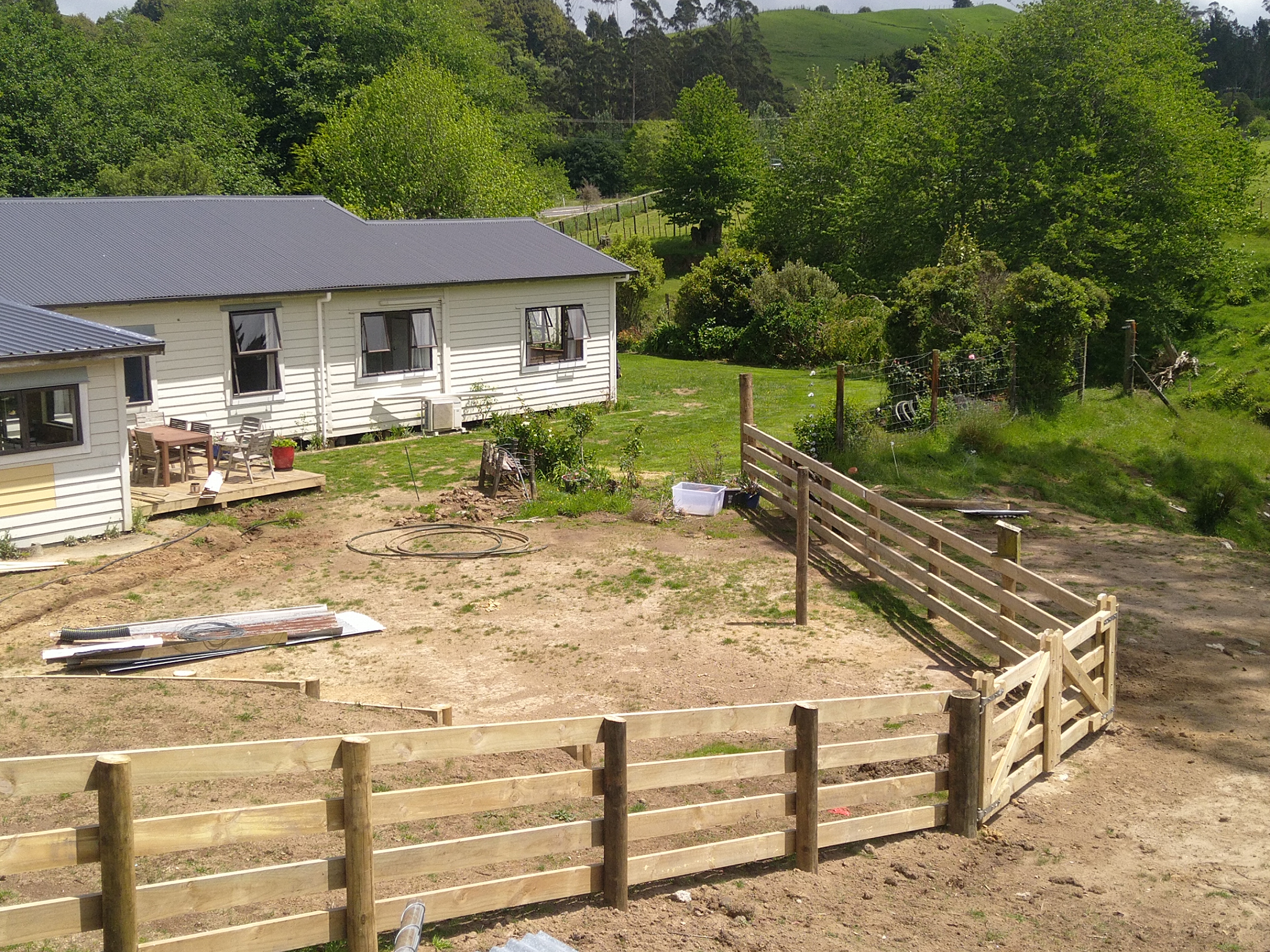
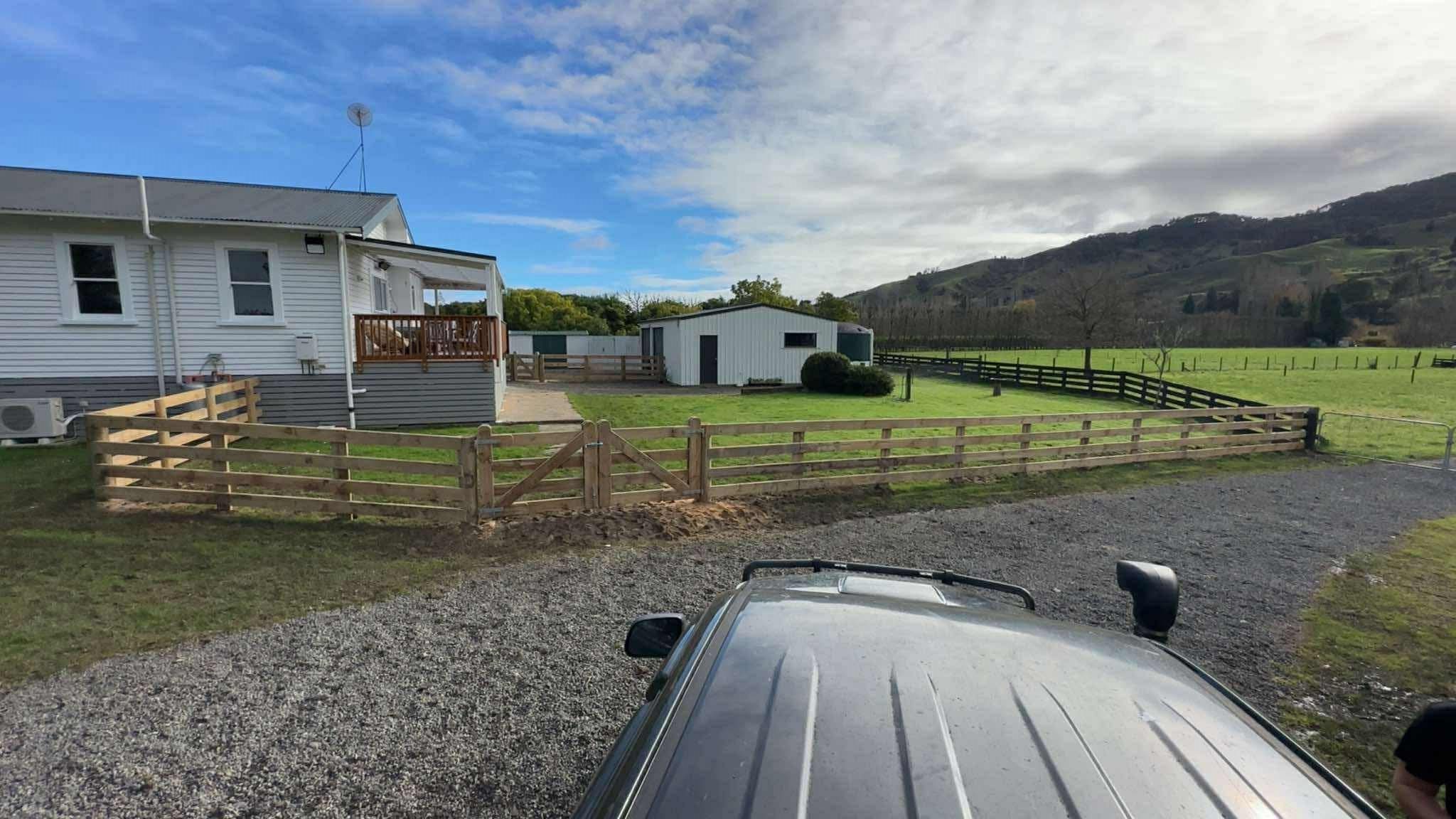
Lifestyle fencing is a game within its own, in my opinion. Clients dreaming of Yellowstone, but living with the reality of a much smaller ‘ranch’.
Our operations cover all aspects of fencing, and lifestyle is included in this. It’s not our main revenue stream, but we certainly do a fair amount each year.
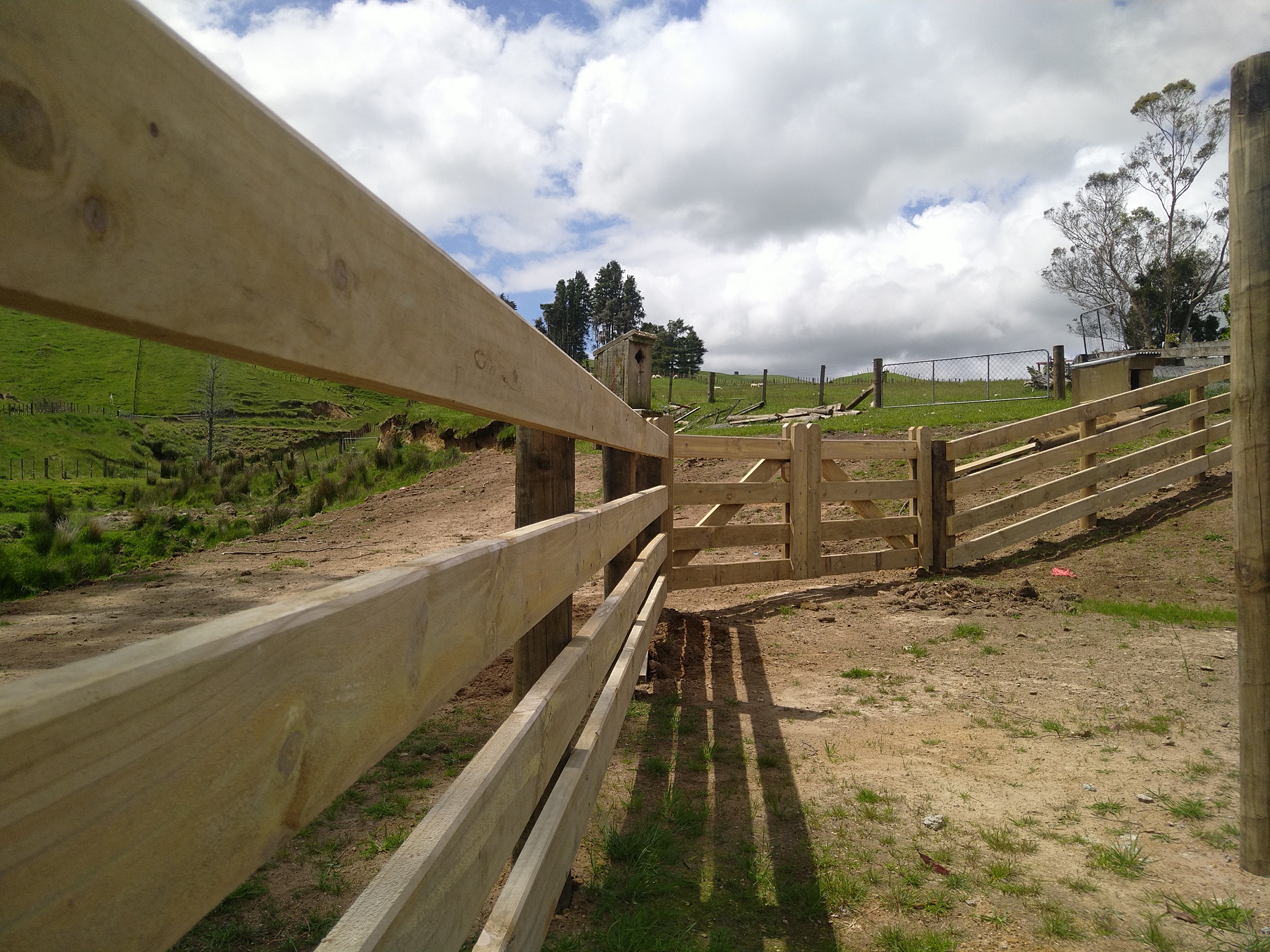
I think it’s one of those sets, you either love it or just think, “Bugger that.” It’s usually a game of, “We need 10 paddocks; a set of yards for sheep and maybe two cows; a pig… yeah, probably a pig; a nice, railed entrance; and we have three troughs for water and need water in each paddock.” All on 5ha. Yip, too easy.
I find lifestyle jobs are unique and can really work the brain – with the clients trying to fit everything they require to make their holding work, to be efficient and user-friendly for both man and stock and fitting it all into 5ha, not into 500ha. Challenging, but so rewarding once it’s done.
Growing up in a family farming environment and living on 30 acres, I believe has helped me in this area of work. Balancing size, what’s really necessary for stock, and an understanding that it’s a huge outlay when broken down to a stock unit investment, and that it’s done for the love of it, not for the production.
Decisions and planning with the client are the most crucial part of this work. Finding out what stock they have, or are planning on having on their property, and stock numbers. This then leads you to work out what sort and size of yard facilities would be required, and an idea of the number of paddocks that would work effectively and efficiently.
In saying this though, you’ve still got to be thinking beyond the fence. Keeping good clear access to underground services in case they’re ever needed, and a water supply to each paddock, once complete. Then it’s onto drawing up a plan, making things fit and work, and discussing once again with the client to check if it’s meeting their needs and expectations.
Having a good understanding of the client’s budget and being on the ball with your pricing is the next big juggle. Open cheque book – you’re dreaming. Keep looking for those hens’ teeth buddy.
Sometimes the dream and plan are all there and achievable, but financially it may be restricted. We have had a few jobs like this, and by working with the clients, we have achieved their goal and dream. It may have taken longer to get there, but we got there. Rome wasn’t built in a day, and neither is a dream.
We have priced a job, and it was more than expected – a lot of gates, with the clients not realising the cost of gates. So, we suggested, as the job was still some time off starting, that the client buy a gate a month until we start. They’d have four gates by the time we started, and that would be enough for the first few lines. Then we started by doing the internal fences to give the client control of the grazing. We came back in 12 months and did the road fence, the railings at the entrance, and the new pen in the yards. In the meantime, each month the client bought another gate, or four or eight lengths of timber, and put it away in the shed until we came back. The job was completed in two stages, but was still completed within 13 months – so the dream was achieved and cashflow managed for the client, when initially they were considering delaying it for a few years and making do.
Not all jobs are full set ups and developments, like any place there are always repairs, maintenance or replacement jobs. The same considerations need to be taken into account.
Thinking back to a job we did for a client – his son organised with us to come in while his parents were away overseas, to sort out their little block. They had about four muttons and 20 odd pigs, heavenly smells. They wanted to split a paddock in half, put in some actual gates to replace the netting and other things that were created as gates, repair some wires, and build a small pig pen and race.
It was a good, simple job to do and pretty straightforward. The thing about this job though, was the interesting things that were used to make gates – block holes and an old car as the side of the pig pen –were pretty well done. But the main thing that held this ranch together was the good old faithful cable tie. Not just a few, but thousands. Cable tie staples, cable tie wire, cable tie termination knots, cable tie nails, cable tie latches, cable tie gudgeons. You name it, the cable tie had it sorted. Very impressive.
I guess it doesn’t matter what job you’re doing – lifestyle, rural, or security – the principles are all the same. Client interaction, asking questions, planning, pricing, delivery, thinking beyond the fence and treating every job the same – providing a high-quality product to a client and striving to improve each job from the last.
All in all, I enjoy these jobs. You meet a huge array of people who are great to deal with, who all have a huge passion for their animals. Whether they are just some randoms to keep the grass down, or it’s Bubbles and Fluff Muff that were cute as lambs, then were meant to go to the white walls, and now the clients are 12 lambs deep and needing their grass in a protein shake – it’s what it’s all about.
Written by Ben Fisher
Published in WIRED issue 79/December 2025 by Fencing Contractors Association NZ
You may also like: A growth frontier for Tauranga contractor
Read WIRED online
Follow us on Facebook
© Fencing Contractors Association NZ (FCANZ)