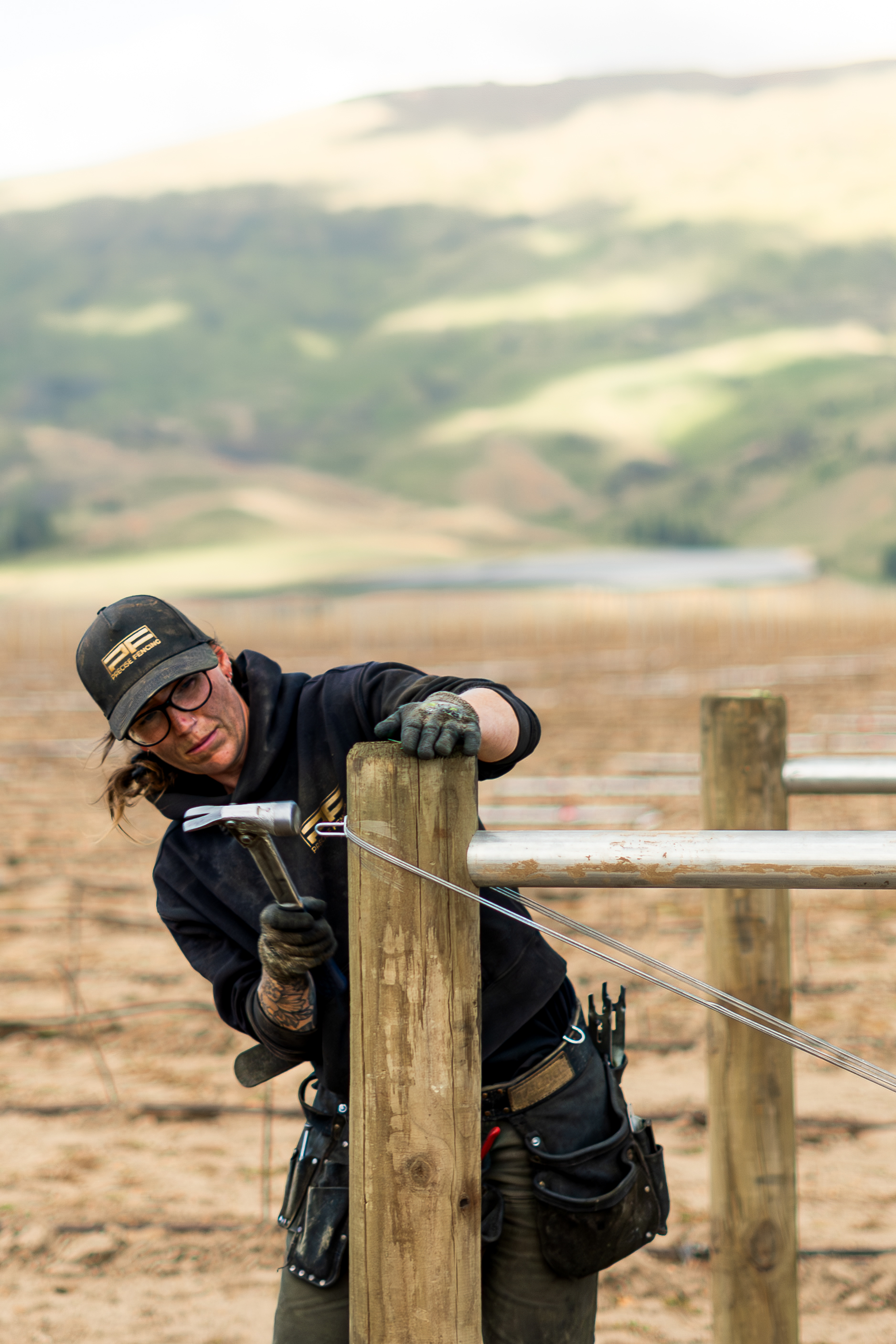
In February, we heard from Derek at Cloudy Bay about pricing for a vineyard development they were planning for spring. After a few conversations around different end assembly options, they settled on a box stay system using a steel pole as the horizontal post, with two timber strainers acting as the end and butt posts.
We chose a 180mm diameter end strainer with a slightly smaller 150mm diameter butt post, knowing the ground was going to be extremely hard.
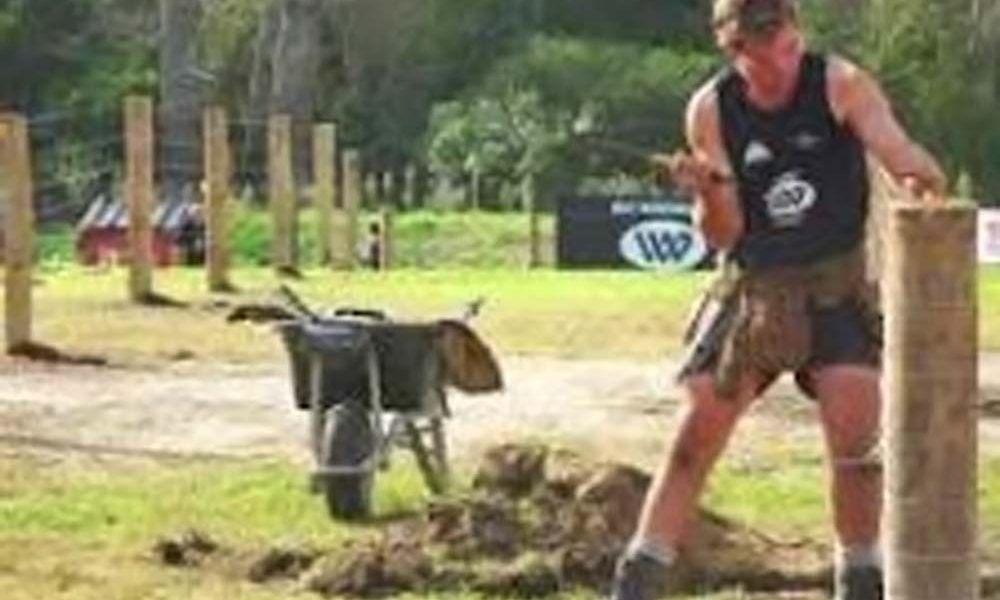
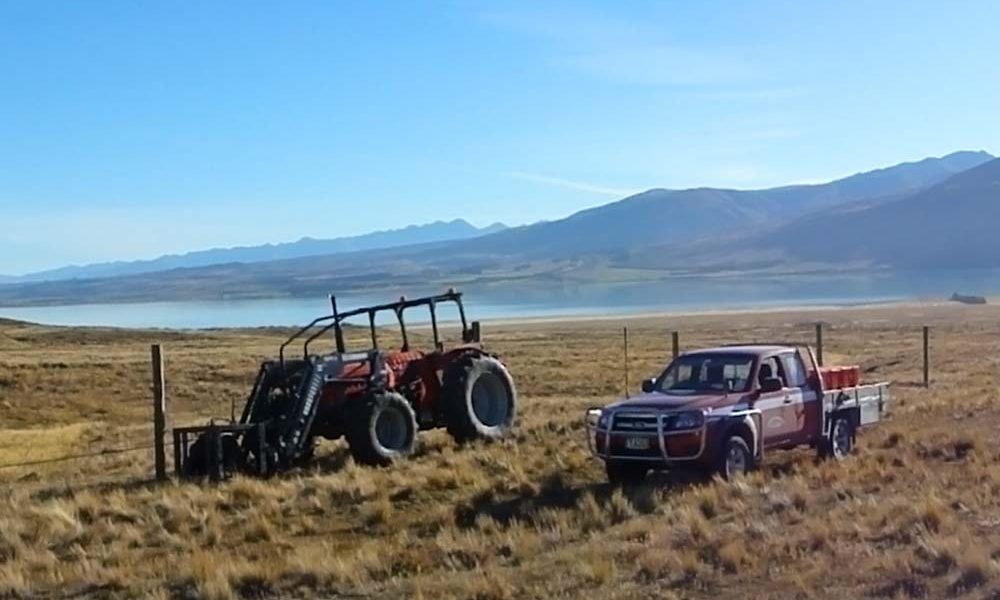
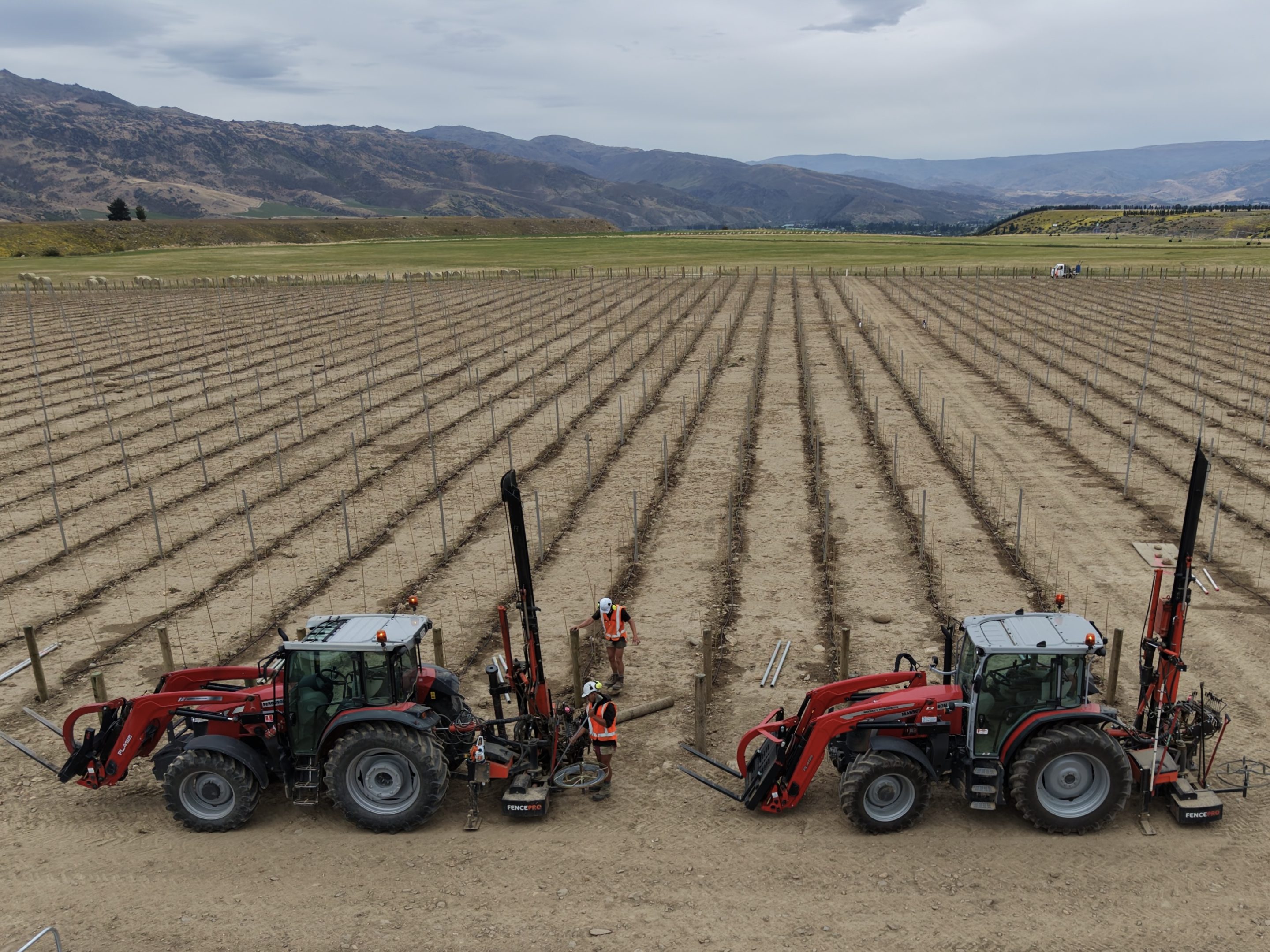
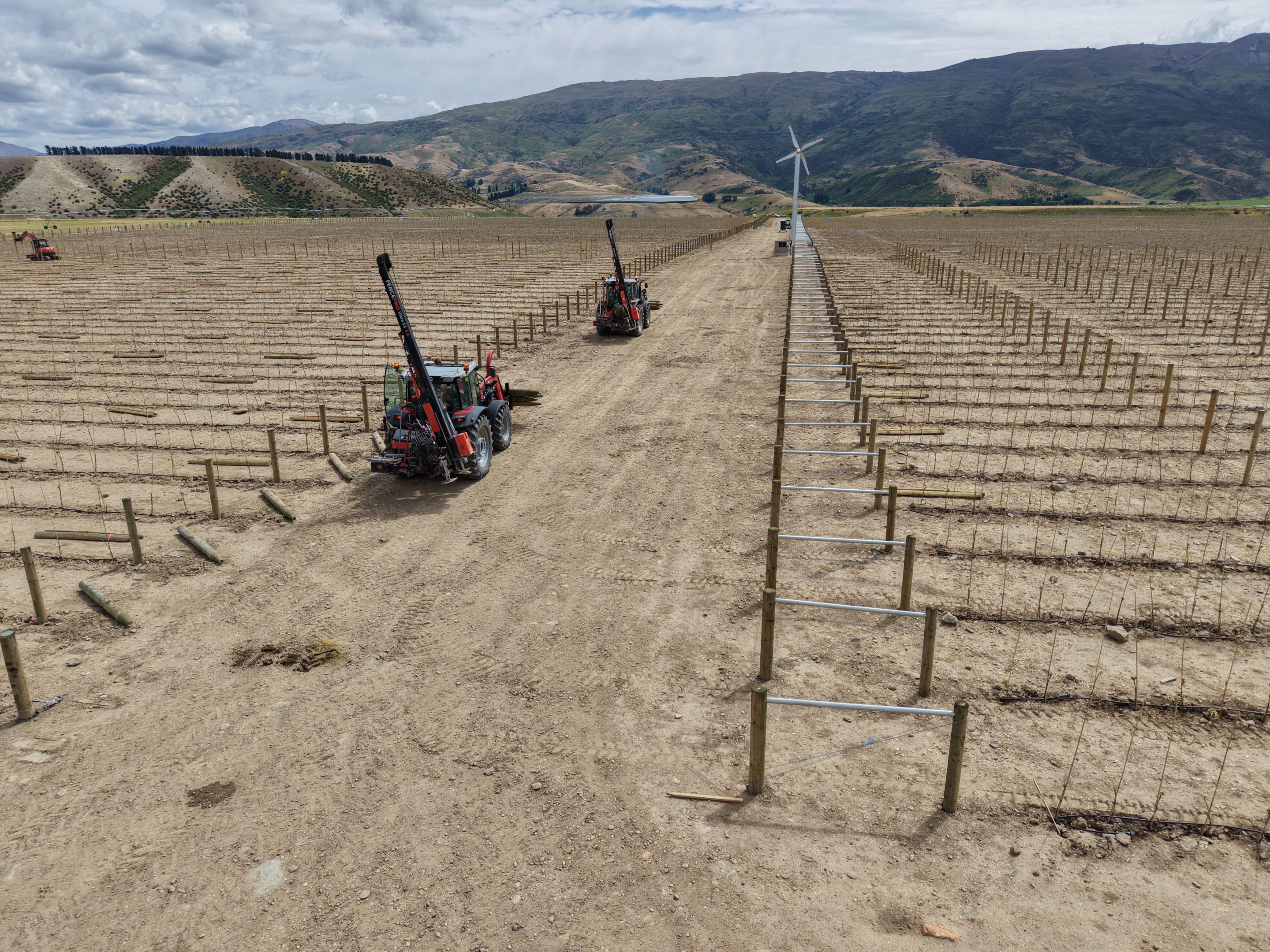
Once the job was confirmed, we decided to invest in another tractor and post driver so we could run two crews on the project. The job involved driving 1,280 strainers, each 2.4 metres long, into ground so hard that digging a single hole by hand could take close to an hour. Most of the rocks were around basketball size, and working through that kind of ground can be tough going.
We pre-drove a 120mm spike and then drove the posts to a depth of 1,100mm. Once the posts were in, we set up an assembly line drilling holes into the timber strainers so the steel horizontal poles could be fitted. Because the steel poles were pre-cut, post spacing had to be spot on. If the posts were too far apart, the steel pole would be too short.
After drilling, we painted the holes with a wood preservative. Steel poles can sweat inside timber posts, and if moisture sits inside the wood over time, it can cause the post to rot from the inside out, so this step is important for long-term durability.
To get vineyard end assemblies looking neat and consistent, accuracy matters. Post placement, straight lines, and post heights all need to be right. Having the right gear and operators who know what they’re doing makes a huge difference.
We stayed busy on other jobs through winter, and before long, spring rolled around. Derek got back in touch to line up a start date, aiming for the week after Labour Weekend. That timing usually works well, with ground temperatures right and enough moisture in the soil for new vines going in.
As usual, we were juggling several projects at once. When we got the call that the new irrigation pump shed had been delayed due to power supply issues, it took some pressure off the schedule. We were still keen to have the project finished before Christmas, as we’d planned to take three weeks off and wanted to come back to new jobs rather than unfinished ones.
In the end, we started about a month later than planned. There were 640 end assemblies to complete. Post driving was slower than expected due to a very wet spring. While the extra moisture helped early on, once the ground dried out it went hard like concrete, making the posts much harder to drive than anticipated.
The ground was the biggest challenge, along with wind and dust. At times the conditions weren’t safe to work in. Visibility was poor and it was difficult to stand up, which doesn’t help when you’re trying to keep everything straight.
This job also lined up with the rollout of our new health and safety app. The team was getting used to doing daily site briefings and machine pre-starts through the app, and this project helped everyone understand the process and why it matters.
Cloudy Bay runs a strict site when it comes to PPE and safety. Halfway through the job, we were audited by their in-house safety manager. We passed with flying colours, with the only issue being one of the boys wearing sunglasses that weren’t safety approved.
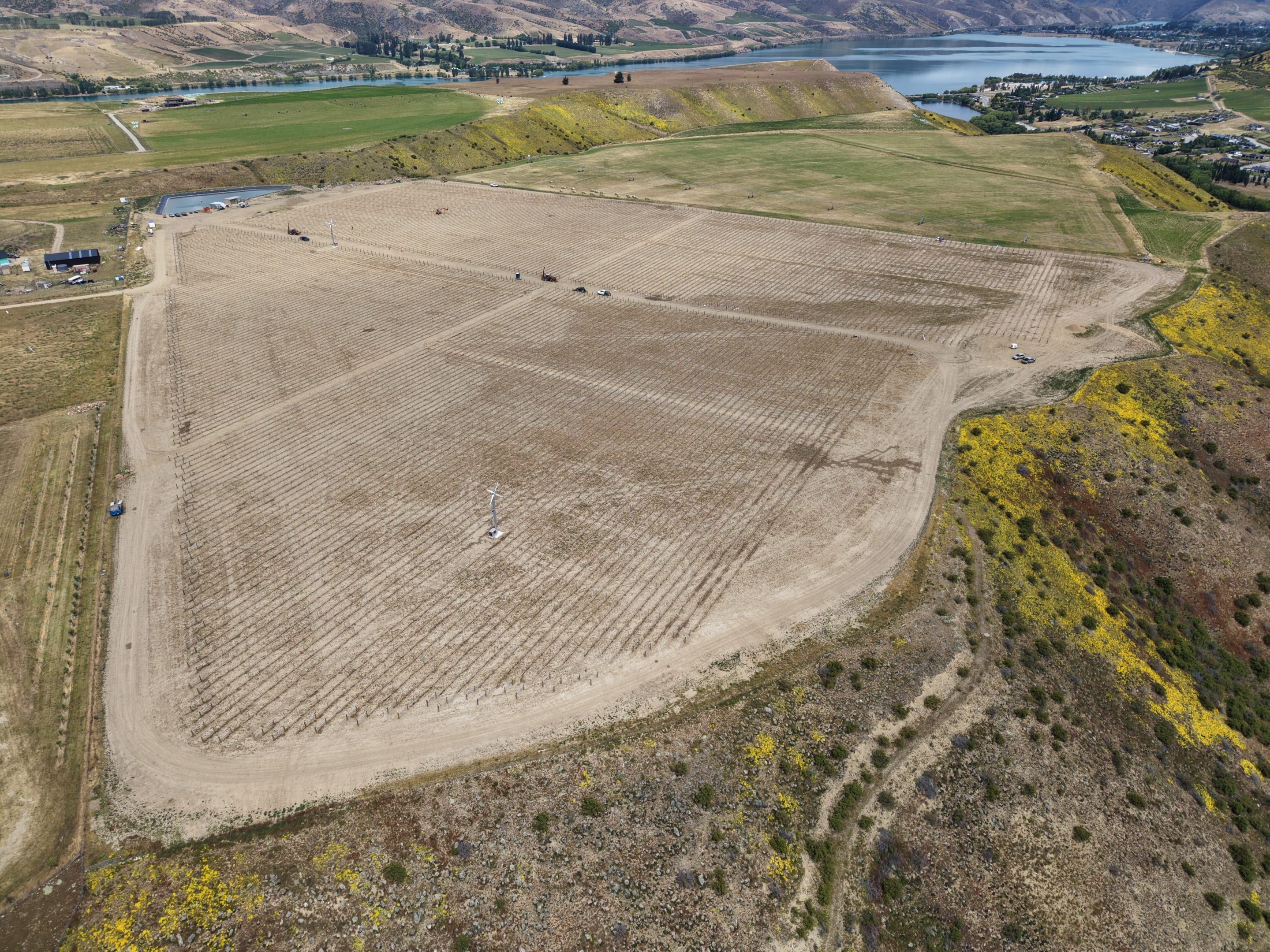
We did hit a couple of water pipes while driving posts, which is never ideal. Power was clearly marked, so posts in that area had to be hand-dug. On the plus side, our new drone captured some great aerial footage of the job, showing the scale of the work and the finished result. The team should be proud of what they achieved.
In the new year, Cloudy Bay brought us back to finish rolling out the vineyard row wire, and we also fenced off their irrigation dam using old vineyard posts.
All up, it was a great project to be part of. The team faced new challenges and really grew, especially in time management, teamwork, and how we document health, safety, and machine processes.
A special mention goes to Point Lumber for supplying the posts. They were pre-chamfered, lathed and ideal for the conditions – out of all the posts driven, only a handful were broken.
Supplied by:

Published in WIRED issue 80/March 2026 by Fencing Contractors Association NZ
You may also like Macrocarpa creates new business speciality
Read WIRED online
Follow us on Facebook
© Fencing Contractors Association NZ (FCANZ)