When Michelle and Rhett Matson started Kiwi Structure, it wasn’t part of a grand business plan. It was born out of necessity, good timing and a very real gap in the Whangarei kiwifruit industry.
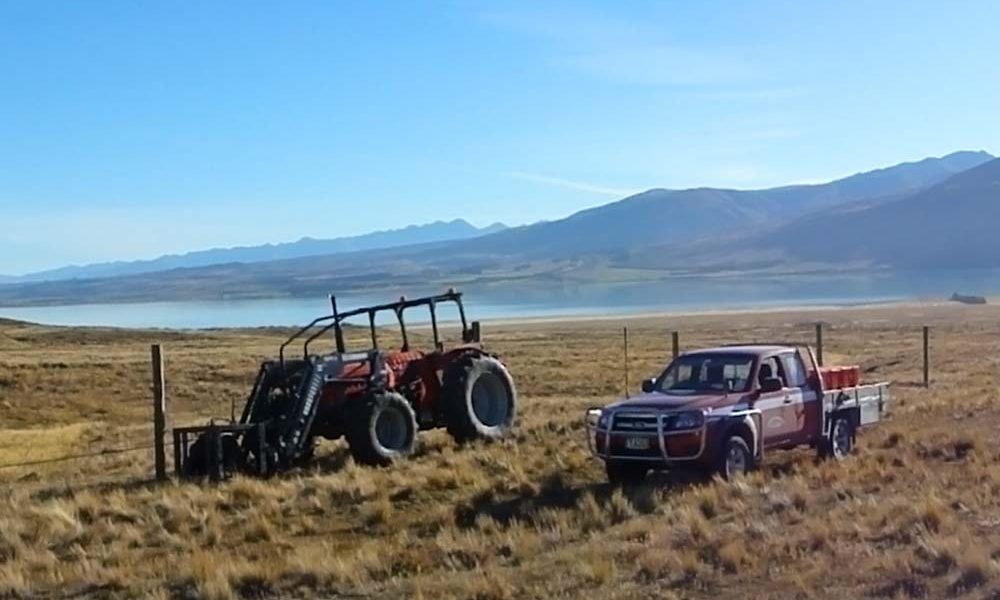
Based in Maungatapere, Northland, Kiwi Structure is a family-owned fencing and orchard infrastructure business that has grown steadily since its establishment in 2020. What began as a one-man operation is now a tight-knit team of four, specialising in kiwifruit orchard development, maintenance and repair, alongside more conventional agricultural fencing.
The catalyst for the business was close to home. When Rhett’s family decided to develop a new kiwifruit orchard, they discovered the nearest specialist contractors were based in Kerikeri. With transport, availability and timing all adding pressure, it quickly became clear Whangarei needed local expertise.
“There was a gap that needed filling,” Rhett said. “And if someone was going to do it properly, it might as well be us.”
From fencing wire to orchard structures
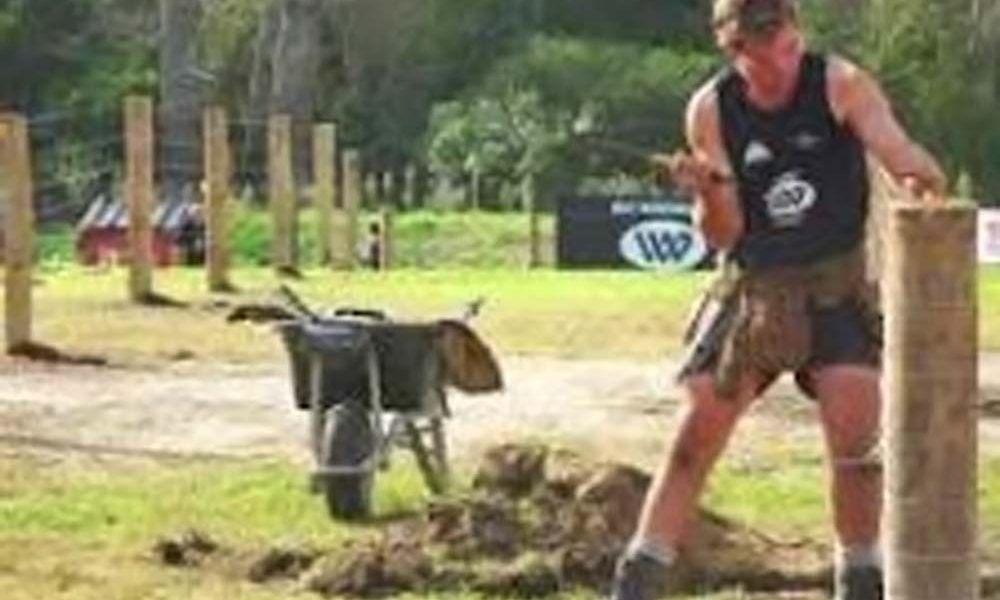
Rhett has been fencing for more than a decade, including time spent working overseas before returning home to Northland to raise a family. His family has been involved in the kiwifruit industry for more than 30 years and has been part of the Maungatapere community for over 150.
That history has shaped the way Kiwi Structure operates today.
“I understand the seasonal pressures growers are under,” Rhett said. “You’re not just building a fence or a structure – you’re supporting a crop, a harvest and someone’s livelihood. That changes how you approach the job.”
Kiwi Structure now works predominantly in the kiwifruit industry, with around 80 percent of its workload coming from orchard developments, expansions, repairs and maintenance. The remaining 20 percent is made up of agricultural fencing, a sector the business leans into during quieter years.
Michelle handles everything behind the scenes. With more than 10 years’ experience in business operations and marketing, she keeps the wheels turning.
“Anything you don’t see on site – that’s me,” she laughs. “Bookkeeping, admin, compliance, marketing and being a general gopher.”
Originally from Hawke’s Bay, Michelle met Rhett overseas before the pair decided to settle in Maungatapere. Today, they juggle business life with raising three young daughters, a reality that shapes how Kiwi Structure runs day to day.
A job that shows what Kiwi Structure does best
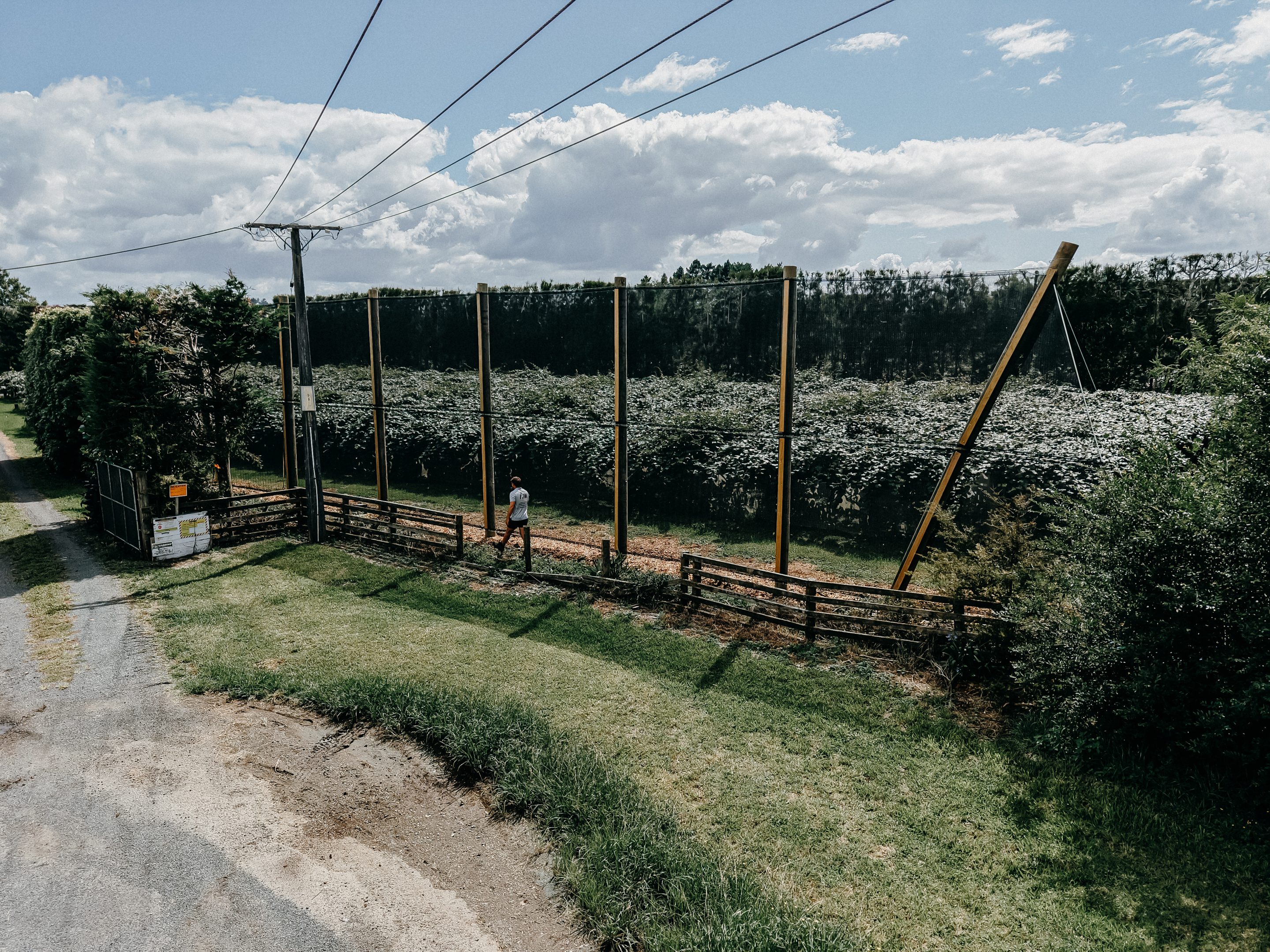
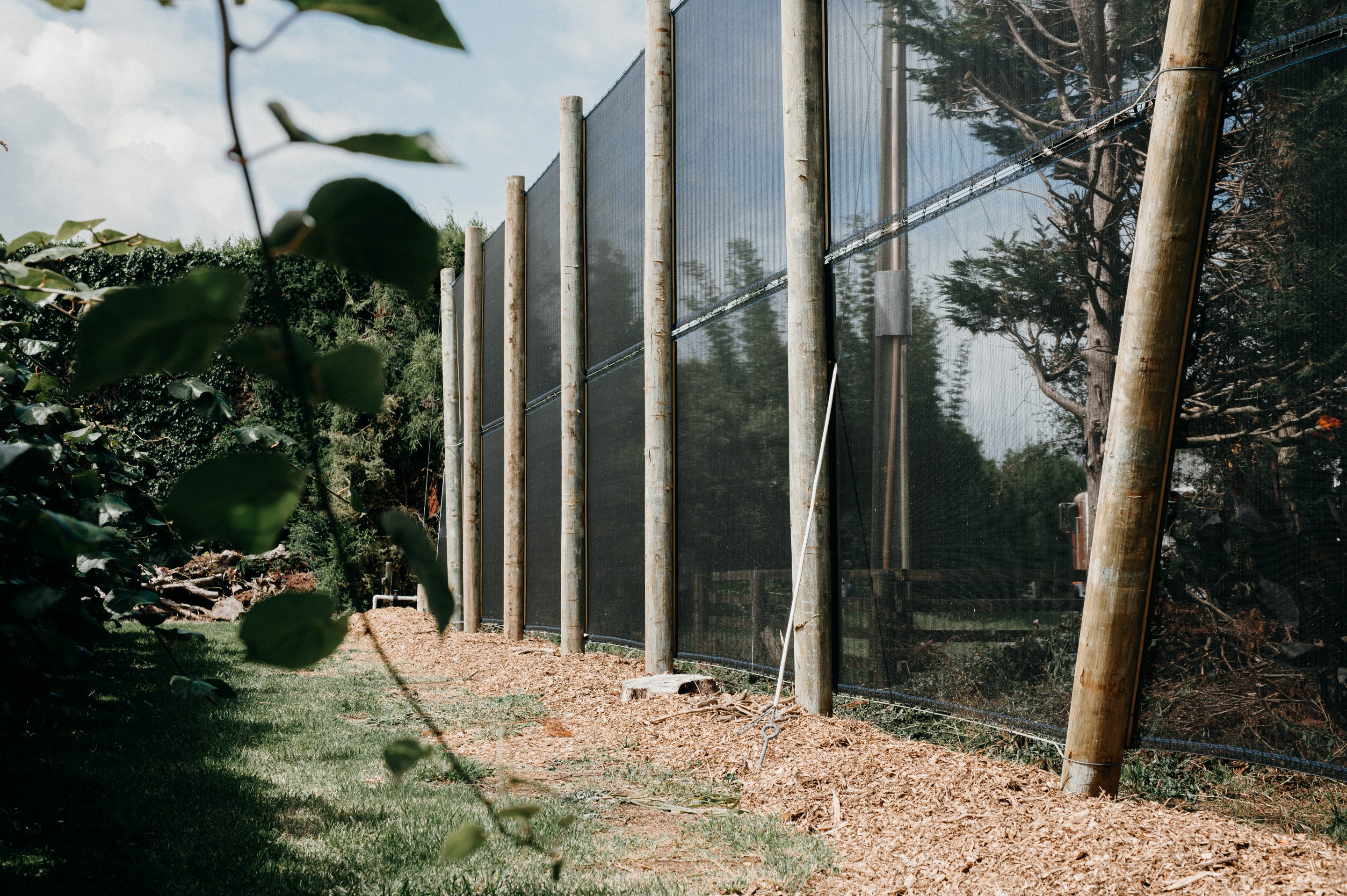
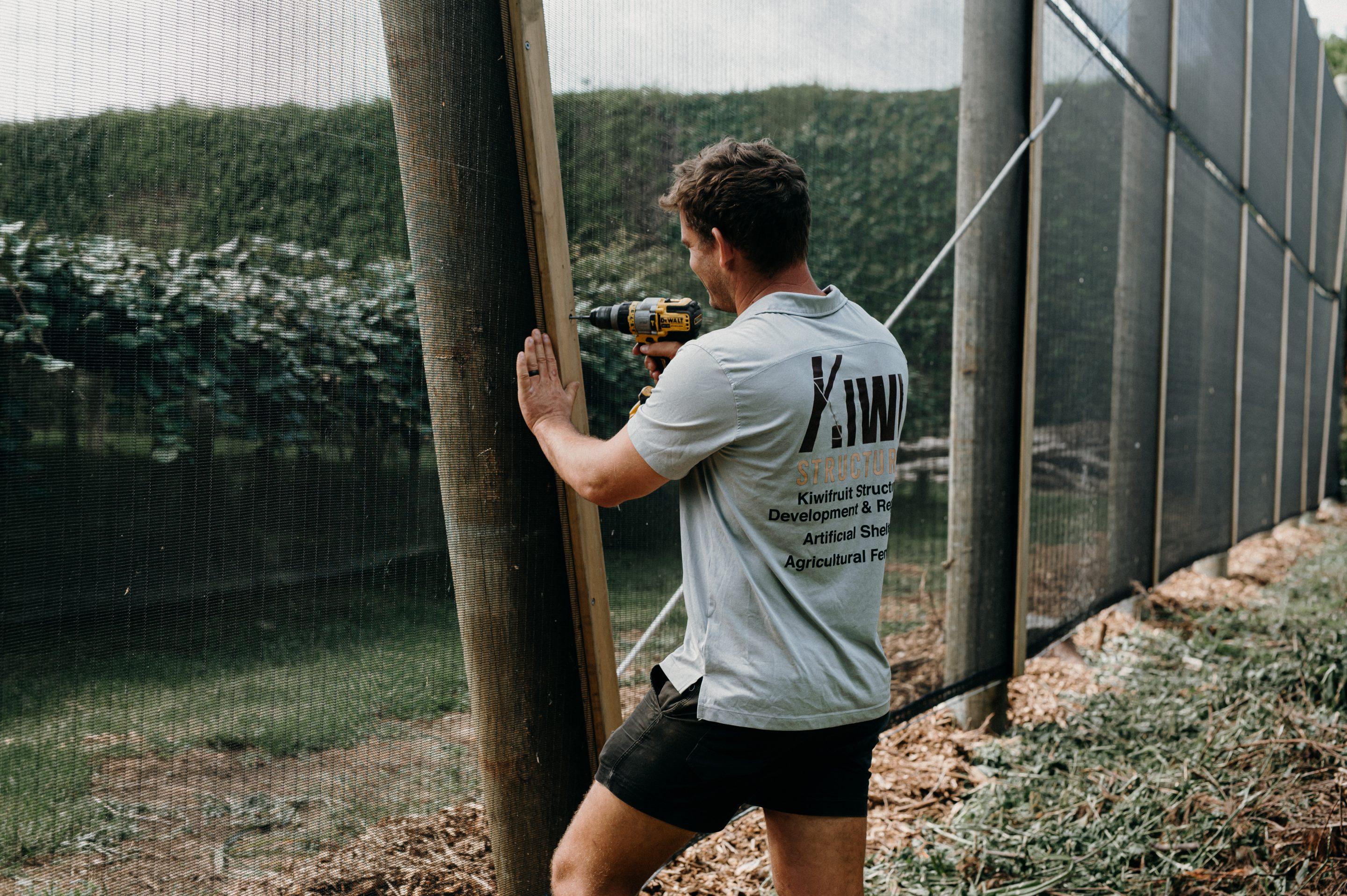
One recent project highlights the specialised nature of the work Kiwi Structure now undertakes – a 30-metre artificial shelter installation for a kiwifruit orchard.
Kiwifruit vines are notoriously sensitive to wind, and effective shelter is critical for both plant health and productivity. In this case, a 30-metre gap existed between established living shelter trees, leaving the orchard exposed. Artificial shelter was the only viable solution.
“This wasn’t a massive job by our standards,” Rhett says. “But it had plenty of complexity.”
The structure was installed in close proximity to live power lines overhead and a high-pressure water scheme below. Before any work began, Kiwi Structure secured a permit from the local power company authorising work within the four metre exclusion zone, to within one metre of the 400 V lines. They also worked closely with the local water utility to identify pipe locations, enabling them to safely operate inside one metre of underground infrastructure.
“That coordination is just part of the job now,” Rhett says. “You can’t afford assumptions when you’re working around services like that.”
The build was completed in stages. While the concrete around the poles was left to cure for two weeks, Rhett and his two-man crew moved on to work elsewhere on the same orchard, maximising efficiency and minimising downtime.
Bigger, higher and tighter
Orchard infrastructure brings a very different set of challenges compared to conventional fencing.
“Everything is bigger, higher and tighter,” Rhett says. “The loads we’re dealing with are on another level.”
Cables used in orchard shelters can be strained to 2.5 tonnes – a stark contrast to the roughly 150kg strain of a standard fence wire. While the team has never had a failure or close call, the consequences of a mistake are never far from mind.
“When you’re five or six metres off the ground, things get your attention pretty quickly,” Rhett says. “You don’t cut corners.”
Health and safety is a daily focus on site. Toolbox meetings are held every morning, and for this particular job, working at height alongside live power and water infrastructure required detailed planning and constant awareness.
“It’s not just ticking a box,” Michelle adds. “Everyone needs to go home at the end of the day.”
The satisfaction of getting it right
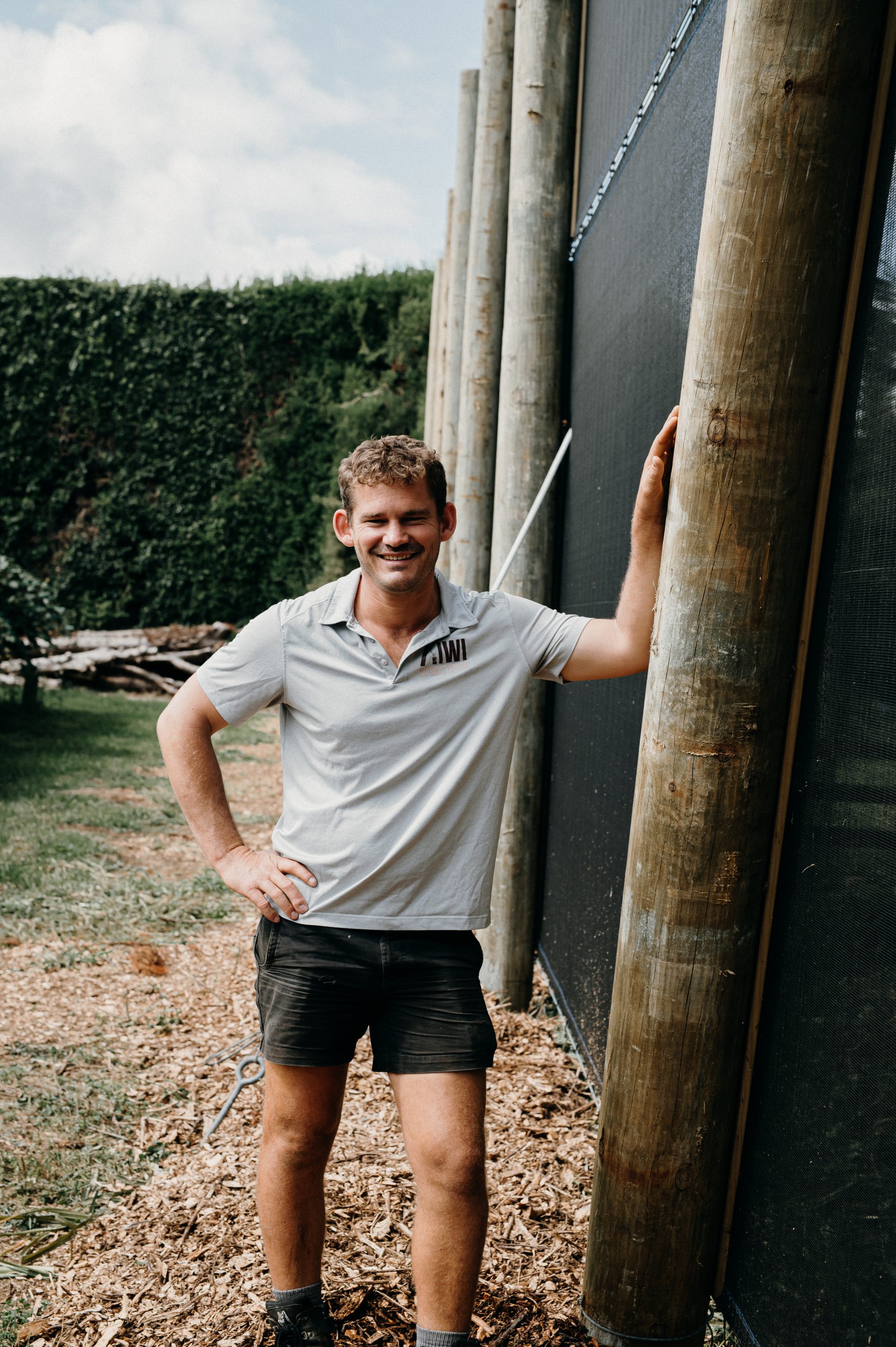
Like many fencing contractors, Rhett takes pride in visible progress.
“There’s something really satisfying about looking back at the end of the day and seeing what you’ve achieved,” he says. “You know if it’s been a productive day.”
One of the most satisfying aspects of orchard shelter work, however, is tensioning the windbreak material itself.
“I’ve spent the last few years refining that technique,” Rhett says. “You don’t want flapping or billowing in a well-built artificial shelter. When it’s tight – really tight – and sitting exactly how it should, that’s a good feeling.”
Efficiency also plays a big role in how he works.
“I’m always thinking two steps ahead. It annoys me if I have to walk back to the ute because I’ve forgotten something,” he laughs. “Time in motion matters.”
In the early days, Rhett listened to podcasts while fencing. These days, running a business means his head is often too full to focus on anything but the job.
Weathering the tough years
Kiwi Structure’s growth hasn’t been without challenges. Shortly after the business was established, Covid hit. That was followed by two tough seasons for the kiwifruit industry, with low returns and damaging weather events slowing investment.
“When things are tight, growers batten down the hatches,” Rhett says. “Only the essential jobs get done.”
During that period, the business pivoted towards agricultural fencing to stay busy and keep cashflow moving.
“When kiwifruit picked back up, we were straight back into it,” Rhett says. “But having that flexibility made a big difference.”
That adaptability has paid off. Kiwi Structure now has a strong base of repeat clients, many of whom call them back for new developments as orchards expand, or for ongoing maintenance of existing structures.
Looking ahead
In 2025, Kiwi Structure was named a finalist in the Northland Business Excellence Awards micro-business category, recognition that reflected both their workmanship and the way they operate.
Rhett is also currently completing his Level 4 Certificate in Fencing through NorthTec, underscoring his commitment to continual improvement.
“I still want to learn,” he says. “You can always do things better.”
For Michelle and Rhett, Kiwi Structure remains very much a family business – built on local knowledge, strong relationships and doing the job properly the first time.
“At the end of the day,” Michelle says, “we’re building structures that have to stand up to Northland weather and support people’s livelihoods. That responsibility isn’t lost on us.”
And in a region where specific expertise once had to be trucked in from hours away, Kiwi Structure has become exactly what it set out to be – a strong, reliable solution built close to home.
Written by Alice Scott
Published in WIRED issue 80/March 2026 by Fencing Contractors Association NZ
You may also like Lifestyle fencing is all part of the job
Read WIRED online
Follow us on Facebook
© Fencing Contractors Association NZ (FCANZ)