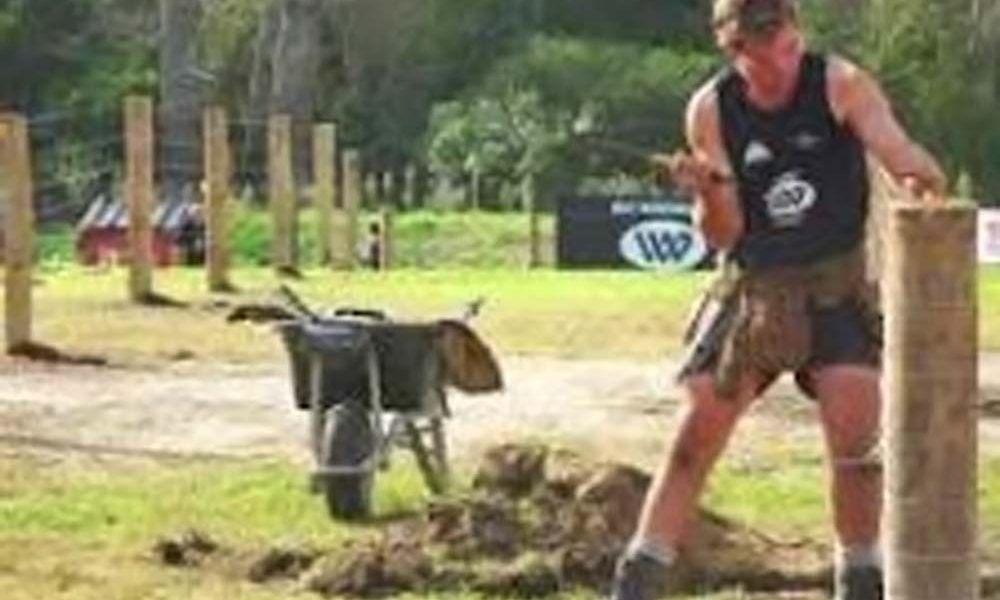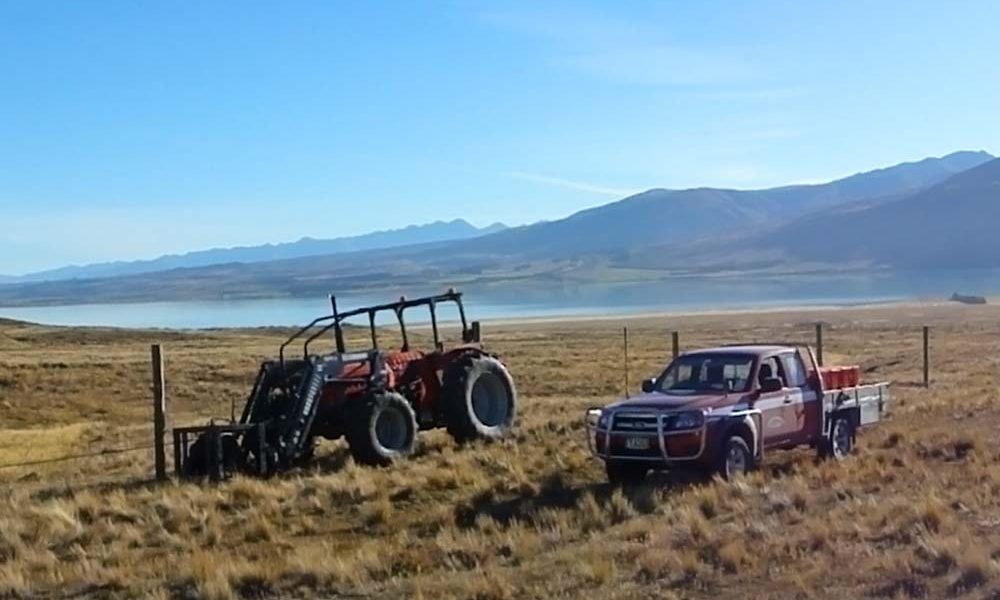
For FCANZ, few names embody the craft, character, and quiet determination of New Zealand fencing quite like A.W. (Bill) Schuler – FCANZ Lifetime Award recipient, Golden Pliers champion, and a man whose influence has shaped generations of fencers.
Bill’s story remains a benchmark for what dedication to quality, curiosity, and continual improvement can achieve. As we celebrate 20 years of FCANZ, it’s only fitting to revisit the journey of someone who not only set the standard, but helped define it. This article featured in the March 2009 edition of WIRED.
SETTING THE STANDARD – Written by Owen Drake
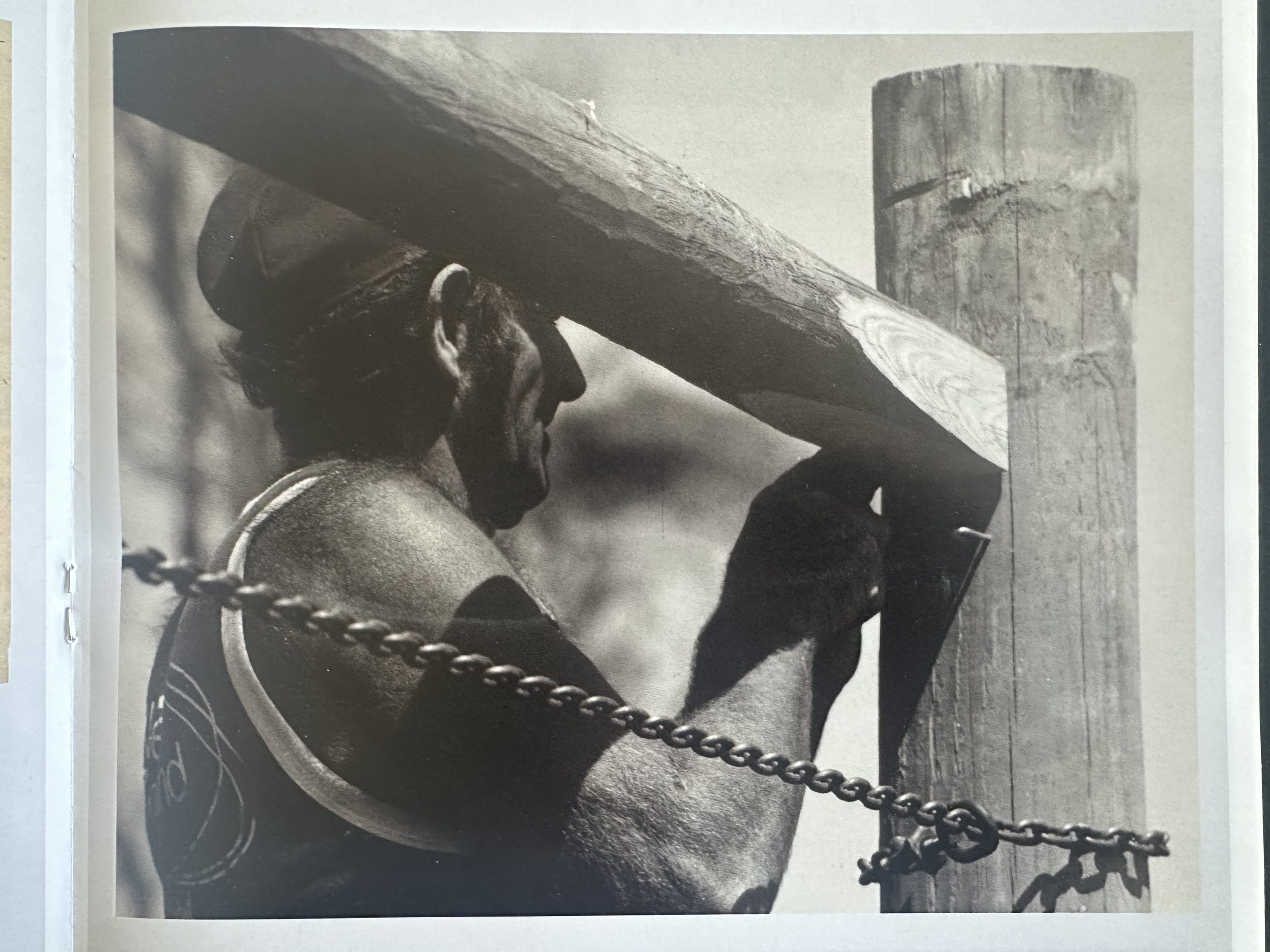
A. W. (Bill) Schuler – Fencer/Farmer, Fencing Instructor/Consultant and Golden Pliers Champion.
I first met Bill in 1985 when he was NZ Wire Industries’ Chief Fencing Consultant. Bill, with Howard Clark and Leslie Claugue, were making the fencing Video – “Fencing The Proven Way”. It was evident back in those days the respect that the NZ Wire fencing consultants, who in their own right were accomplished fencers from all around New Zealand, held for Bill.
Bill, a multi Golden Pliers Champion himself, was an inspiration to his son George, who would eventually out-perform his father by winning the title six times.
So how did Bill get to be so good – was it Weetbix? Maybe not, but perhaps perseverance, patience and continually analysing his own performance had a lot to do with it.
Raised on a farm in Lichfield, Tokoroa with 5 brothers and a sister, (you just have to feel sorry for the sister don’t you?) Bill was destined to enter the priesthood. Well that was his mother’s idea. Bill however chose to hang out with his older brothers Wally and Arthur looking after the house and cooking the meals – somebody had to do it.
 Bill’s first real job was working on the family farm followed by a bit of tree felling. He also turned his hand to building for a period. Meanwhile brothers Wally and Arthur were contract fencing for Lands & Survey in the Rotorua – Taupo district, ring fencing blocks. Bill decided the farming lifestyle was more his bag than building. An added bonus was that he could more easily fit in his passion for shooting, so he swapped his nails for staples and joined his older brother Arthur on the fence line.
Bill cut his teeth on the good old 7 wire fence with 5 number 8 plain, 2 barb, 5 totara post and 25 totara battens to the chain. Back in those days it was tough work, as it was hand tools for everything – an axe, saw, chisel, shovel and spade.
Bill was working in pumice country, where spade digging was more efficient and accurate than using power borers or post drivers, which meant less work effort.
He did consider the chainsaw a useful tool though. But to Bill’s dismay the chainsaw left cut marks on the stay and that just was not good enough, so Bill followed Erni Schicker’s lead, and the plane was added to the tool kit.
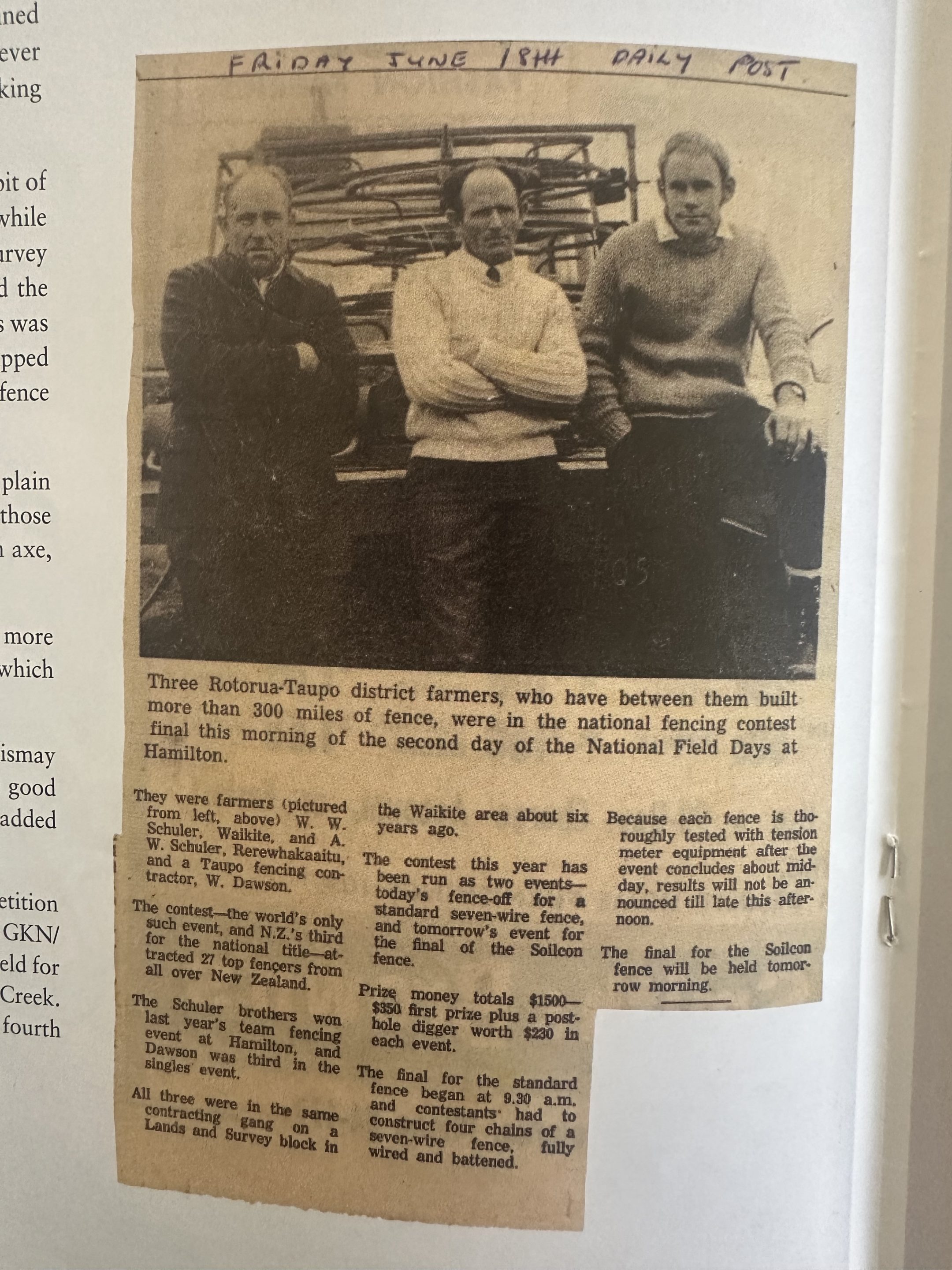 Bill entered his first fencing competition in 1970. The competition organised by the National Field Days Society and Sponsored by GKN/NZ Wire Industries (now Pacific Wire). The competition was held for many years at Te Rapa Racecourse before moving to Mystery Creek. Bill didn’t win the first or the second competition. It was on his fourth attempt that he became the champion.
An interview with Bill
How many years were you fencer?
I started when I was 25 and finished when I was around 67 (42 years).
Did you see fencing as a job or a means to earn enough money to buy a farm?
It was a means to earning money. I had just finished a share milking job and was looking for some way to earn money. My older brothers Arthur and Wally were already fencing.
Where did the 8 wire fence come from when Lands & Survey and Railway standard was 7 wires?
Not sure, but I do recall early on at one competition a South Island competitor, Bob Calder from Little River, built an 8 wire fence in the finals when a 7 wire was specified. He was penalised.
Do you recall your first HT wire experience?
Yes, I remember the unforgiving elasticity of high tensile wire – we lost a foot post.
What was the general fencing standard like when you started?
The standard was poor. I started when I was 25. My fencing quality then could not match a 25 year old fencer now days. That’s how much the standard of fencing has improved.
Why did you first enter the fencing competition?
Bill Dawson talked me into entering. It was the second Field Days competition at Te Rapa GP. Brother Wally entered the first which was held at Ruakura.
What did you learn from those early competitions?
I picked up on techniques and practices by watching other fencers and observing their work.
What does it take to be a Golden Pliers winner?
Three things – Observing, analysing and detail. Observing other fencers work and more importantly my own jobs. I would look at a situation and analyse what I had to do to improve on it. Attention to detail. It was important to me to put up a quality fence that was going to be there for a long time – 40 to 50 years is my fence life expectation.
How many times did you win the Golden Pliers?
I won 4 years, but 5 competitions as one year they held two different singles competitions and left out the doubles.
When did you retire from fencing competitions?
The year after I beat John Fagan. I took a year off and the following year John beat me. I addressed that the following year by beating John.
What was the most difficult fencing job you undertook?
A Lands & Survey block in the Waraki district, Taupo. The terrain was steep hills with swamp gullies.
What countries have you fenced in?
Fenced in 5 states in Australia, also in California, and Switzerland. I have instructed in Australia, Switzerland and Germany and judged fencing competitions in Germany.
What was the most satisfying fencing job?
All my fencing jobs were satisfying because each job was a different challenge.
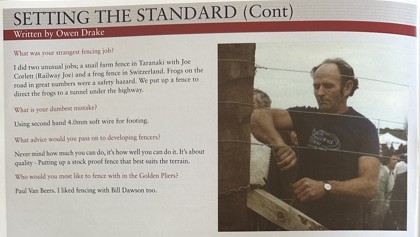
What was your strangest fencing job?
I did two unusual jobs; a snail farm fence in Taranaki with Joe Corlett (Railway Joe), and a frog fence in Switzerland. Frogs on the road in great numbers were a safety hazard. We put up a fence to direct the frogs to a tunnel under the highway.
What is your dumbest mistake?
Using second hand 4.0mm soft wire for footing.
What advice would you pass on to developing fencers?
Never mind how much you can do, it’s how well you can do it. It’s about quality – putting up a stock proof fence that best suits the terrain.
Who would you most like to fence with in the Golden Pliers?
Paul Van Beers. I liked fencing with Bill Dawson too.
Published in WIRED issue 80/March 2026 by Fencing Contractors Association NZ
You may also like From humble beginings
Read WIRED online
Follow us on Facebook
© Fencing Contractors Association NZ (FCANZ)